Table of Contents
The most sustainable packaging isn’t a new material. It’s a smarter shape.
The packaging industry is not lacking innovation. It’s lacking direction.
For years, the conversation has revolved around materials, paper instead of plastic, biodegradable instead of synthetic, compostable instead of landfill-bound. On paper, it sounds like progress. In practice, it has barely moved the needle.
Global plastic waste crossed 225 million tonnes in 2025, and packaging alone still accounts for nearly a third of it. At the same time, the sustainable packaging market is projected to reach $594B by 2035.
So the question is not whether we are trying. The question is why the outcomes are still falling short.
The answer is uncomfortable but simple.
We are solving the wrong problem.
“The future of packaging isn’t about replacing materials, it’s about redesigning how they behave.”
The shift from material to geometry
Most packaging today is designed as a static object. A fixed box, a fixed insert, a fixed form that is replicated thousands of times. When a new product comes in, the process starts again from scratch.
This approach is inherently inefficient. It creates waste, redundancy, and complexity at scale.
The most advanced packaging systems today are moving in a completely different direction. They are no longer asking, “what material should we use?” but instead asking, “how can structure do the work?”
This is where parametric thinking enters.
Instead of designing a single outcome, designers define a system using a small set of variables. These variables control how the structure behaves, adapts, and performs under different conditions.
Typically, these include:
- spacing and density
- angles and fold logic
- cell size and expansion ratios
Change the inputs, and the same system produces entirely different results.
This is not iteration. This is generation.
Brands that are already operating this way
What makes this shift real is not theory, it is already being applied by companies solving real packaging problems at scale.
Each of the following examples looks different on the surface. But underneath, they all follow the same principle: geometry replaces material complexity.
1. Hexpand
https://hexpandpackaging.com/
Designing retention into the structure
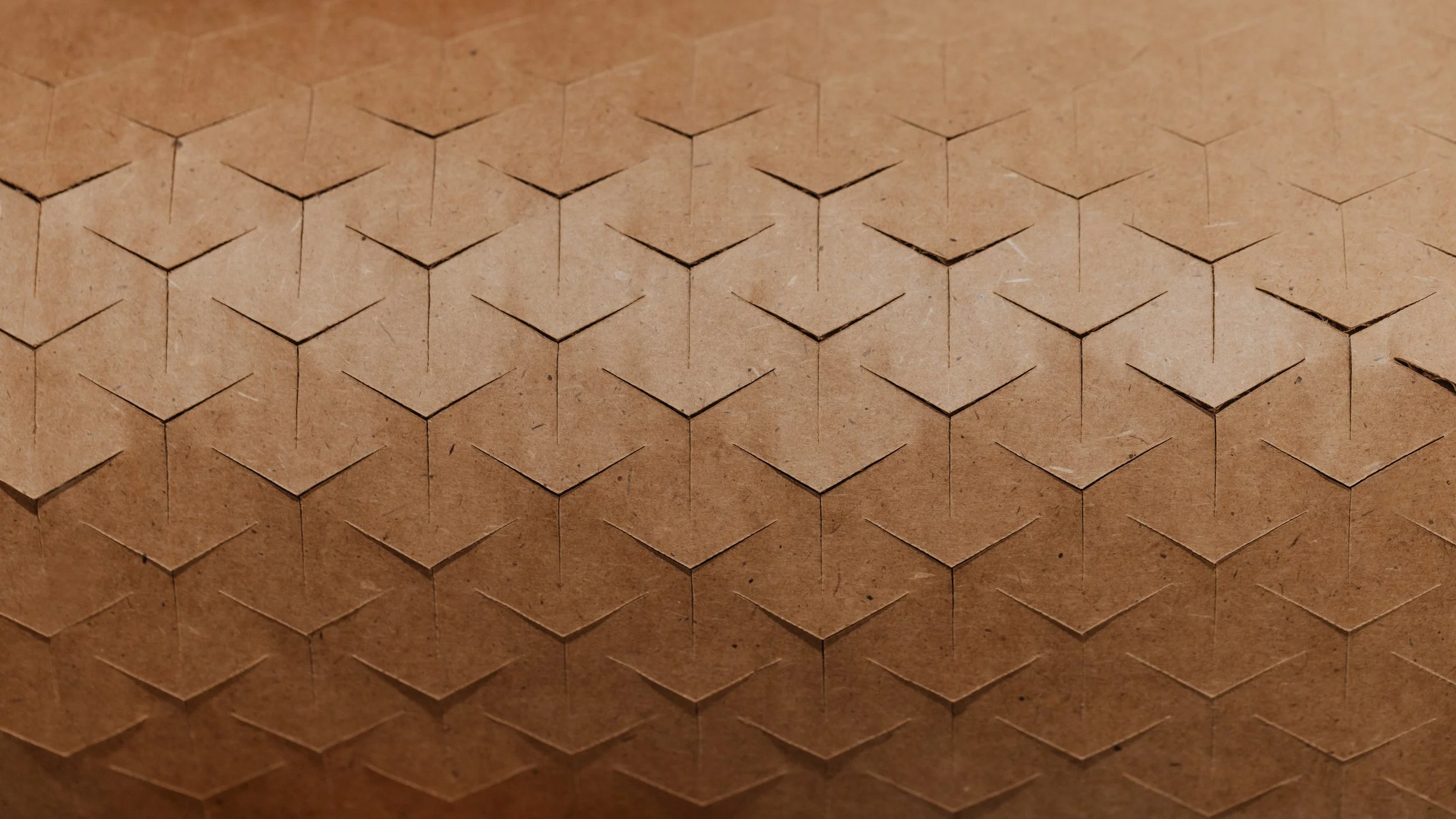
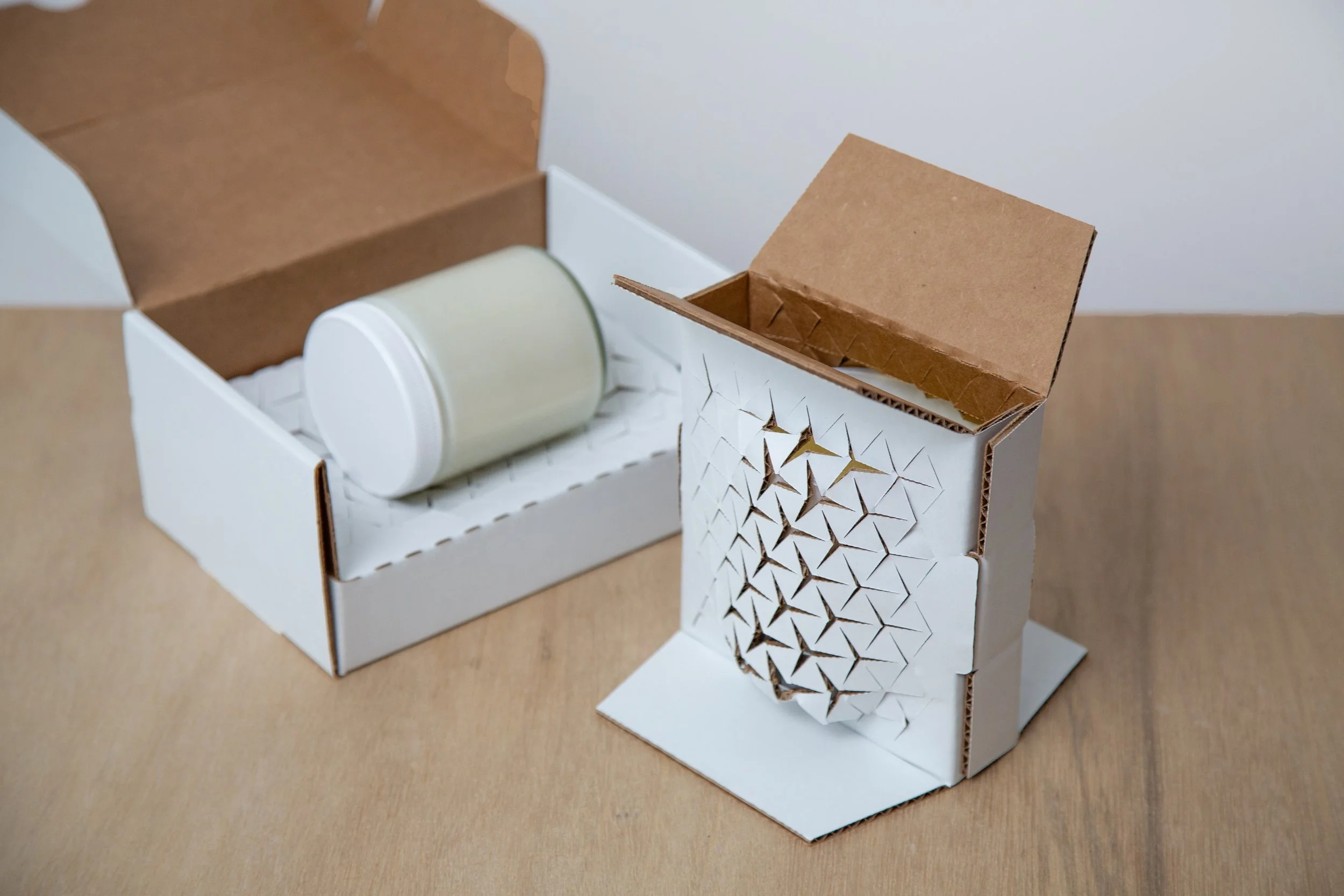
Hexpand’s approach is deceptively simple. A slit-and-node tessellation is cut into corrugated board, which, when folded, expands and grips the product in three dimensions.
There are no additional components involved. No foam inserts, no adhesives, no multi-material layering. The structure itself becomes the mechanism.
What makes this system powerful is not the pattern alone, but how it can be controlled. A few key parameters define its behavior:
- node size, which influences contact points
- slit length, which affects flexibility
- pattern density, which determines grip strength
By adjusting these variables, the same base design can securely hold completely different products, from fragile glassware to heavier industrial components.
This is a clear example of a parametric system, even if it is not described that way.
2. VTT FOLD
https://www.vttresearch.com/en
Origami as an engineering system
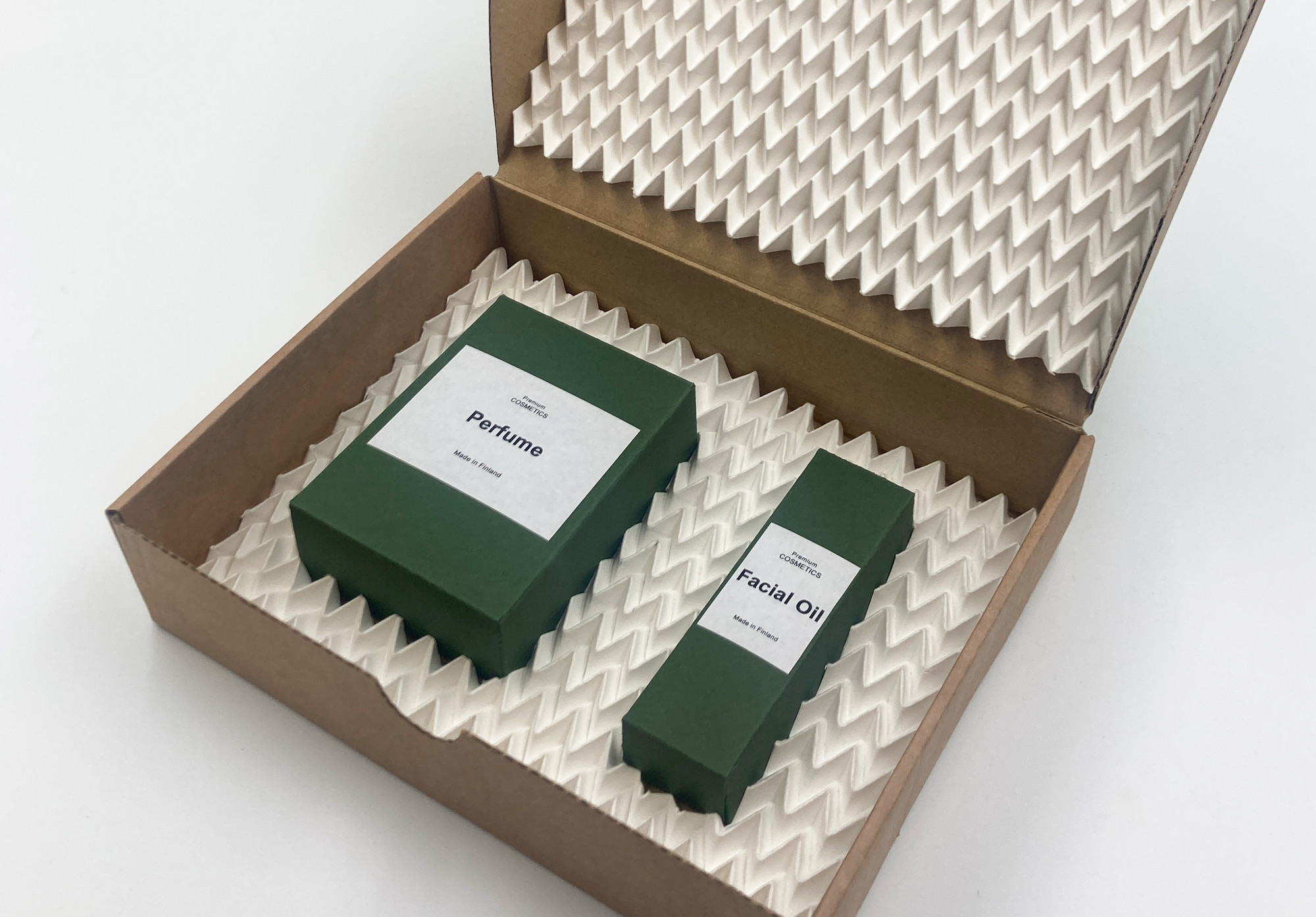
Developed by VTT in collaboration with Aalto University, this system uses the Miura-ori fold to transform flat cardboard into a compressible, shock-absorbing structure.
What makes it remarkable is not just its performance, but its sensitivity.
A small change in fold angle can significantly alter how the structure behaves. At one angle, it provides rigid support. At another, it becomes flexible and energy-absorbing.
This level of control is not achievable through material substitution alone. It is entirely driven by geometry.
The fold pattern is not decoration. It is the product.
3. HexcelWrap (HexcelPack)
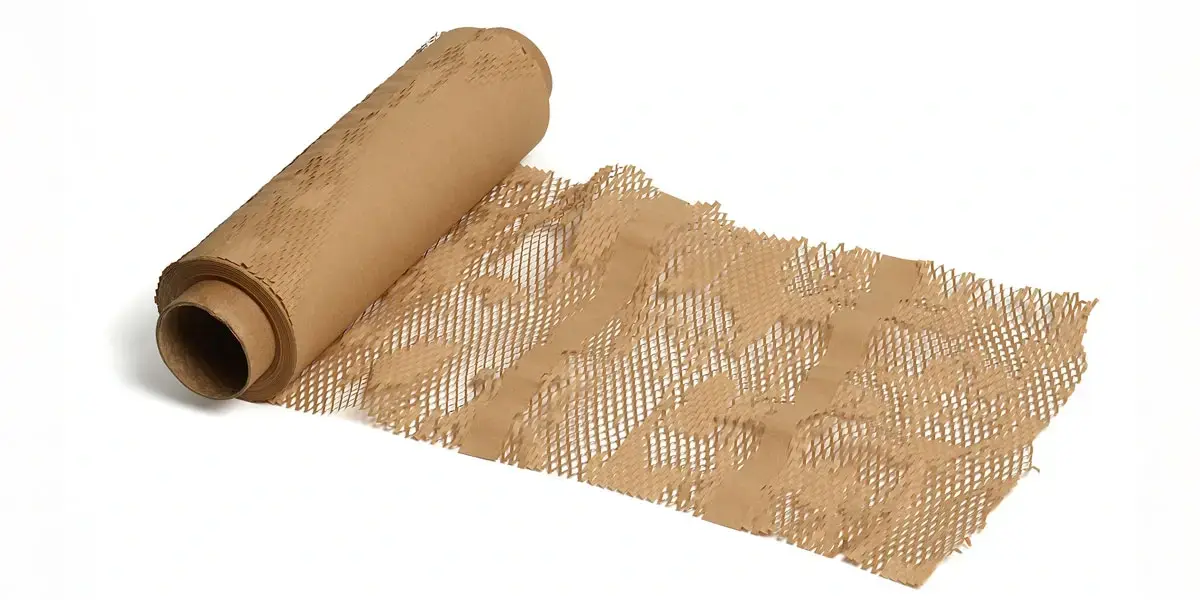
https://www.hexcelpack.com/
Eliminating components through interlocking geometry
HexcelWrap focuses on a different problem, stability during transit.
Its slit-sheet design expands into interlocking hexagonal cells that naturally grip onto themselves. This eliminates the need for tape or adhesives entirely.
The performance of the system depends on:
- slit spacing, which controls expansion
- slit angle, which affects interlocking behavior
- slit depth, which influences cushioning
These parameters allow the same material to behave differently under different conditions, without introducing additional elements.
4. Flexi-Hex
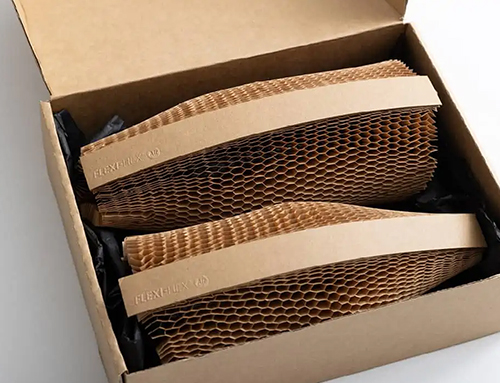
https://www.flexi-hex.com/
One structure, multiple product sizes
Flexi-Hex applies honeycomb geometry to cylindrical packaging.
A flat sleeve expands to wrap products of varying diameters, from bottles to candles to other cylindrical goods.
What stands out here is the efficiency of the system. It relies primarily on:
- expansion ratio as the governing parameter
With a single variable, the design adapts to multiple use cases. There is no need for multiple SKUs or custom sizing.
This is the essence of scalable design.
Why most designers still struggle to build this
Most designers already understand the potential of parametric packaging. They’ve seen the examples, they understand the logic, and they know geometry can replace material complexity.
And yet, very few actually build systems like this.
The problem is not creativity. It’s execution.
Traditional CAD tools were never designed for this level of parametric thinking. They are built around static geometry, fixed sketches, and rigid outputs. Every variation requires manual adjustment, and every iteration adds friction.
Change one dimension and something else breaks. Explore one variation and it takes multiple steps to validate it.
Over time, this friction compounds.
Designers stop exploring. They simplify decisions. They settle for fixed solutions, not because they lack ambition, but because the tools make anything else impractical.
Where BeeGraphy changes the workflow
BeeGraphy removes this friction by shifting the way geometry is created.
Instead of constructing shapes step by step, you define relationships between elements. Geometry becomes an output of logic rather than manual effort. You are no longer asking what a shape should be, you are defining how a system should behave.
A typical workflow is simple but powerful:
- Build a base structure, such as a tessellation or fold system
- Expose key parameters like density, angle, or scale
- Connect them to sliders or inputs
- Observe the geometry update instantly
This transforms the process from design to exploration.
You are no longer creating a single packaging solution. You are building a system that can generate thousands of variations without starting over.
https://beegraphy.com/market/product/hexpand-packaging-9af
https://beegraphy.com/market/product/hexcelwrap-837
From parametric design to real-world fabrication
This is where most tools fall apart.
Parametric models are easy to create, but difficult to manufacture. Flattening geometry is manual, exports are inconsistent, and production constraints are disconnected from design decisions.
BeeGraphy closes this gap.
Recent improvements have strengthened the connection between parametric modeling and fabrication, making outputs directly usable. The same system that generates your design can also generate production-ready geometry.
That means:
- Flat patterns can be derived directly from parametric models
- Parameter changes automatically update fabrication outputs
- No need to rebuild geometry for manufacturing
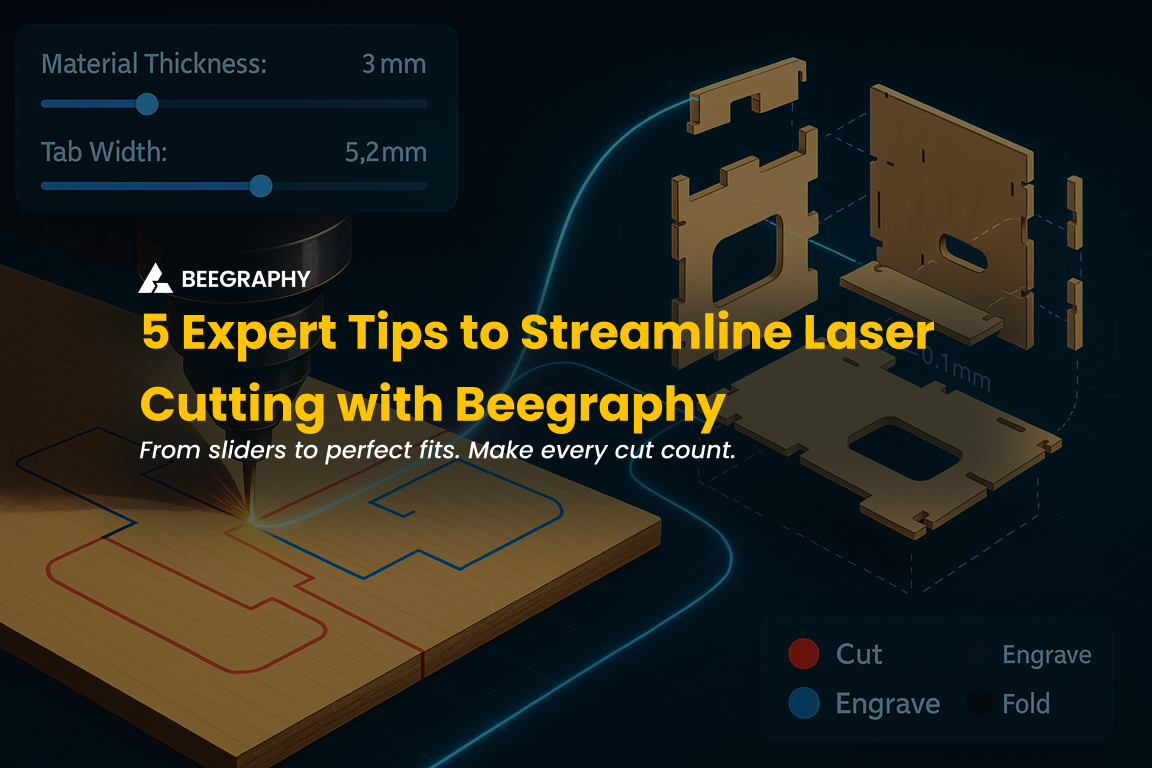
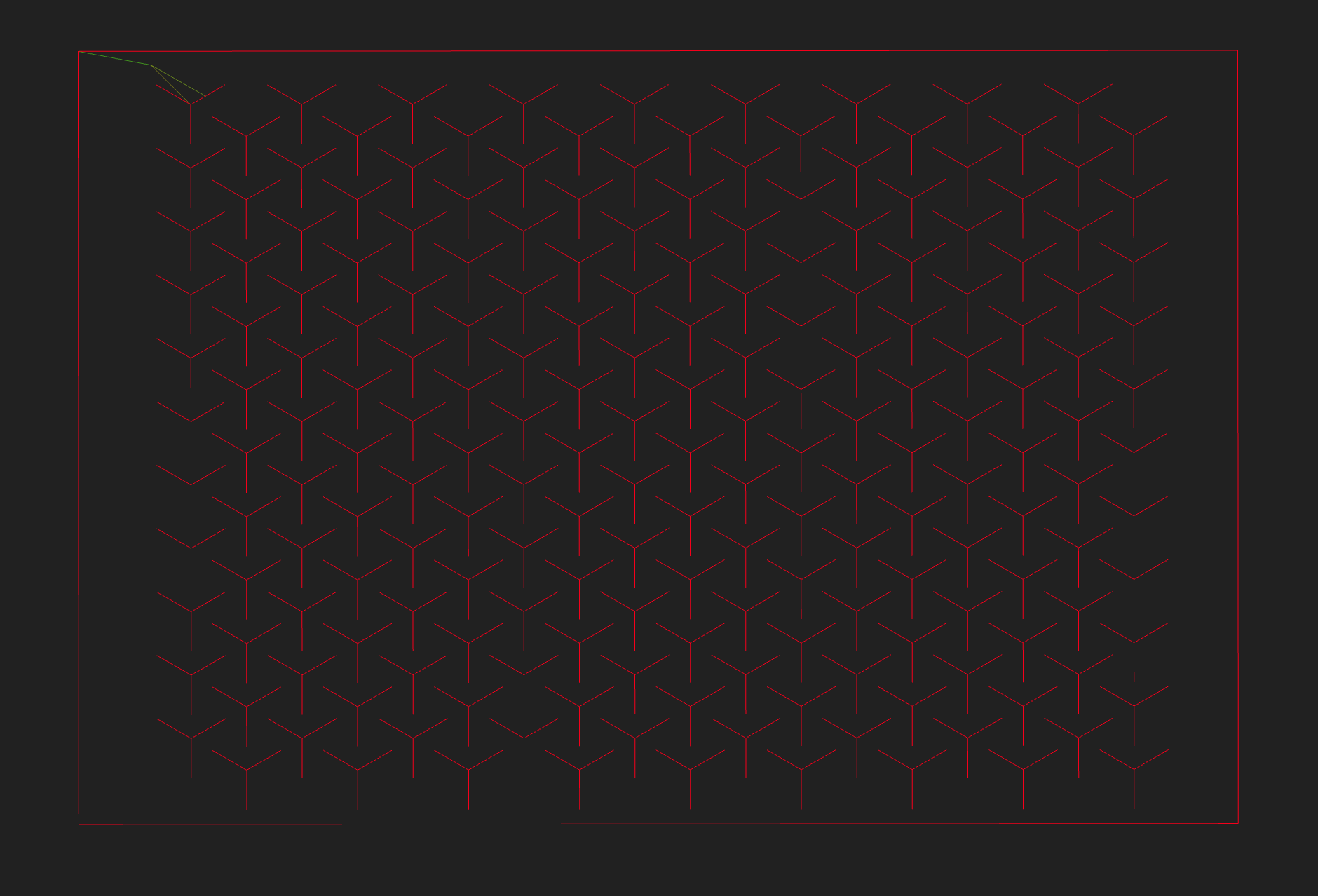
To see how this works, take a simple honeycomb structure like GreenWrap. In BeeGraphy, the pattern isn’t just visual, it can be directly mapped as cut geometry onto a flat sheet. The hex grid, along with parameters like cell size and expansion, translates into precise cut lines that can be fabricated immediately.
As you adjust these parameters, both the structure and its cut pattern update in real time, making it easy to move from design to production without any redraw.
More importantly, this is not just visual. The same system can produce fabrication-ready outputs without any redraw or translation step.
This is what makes parametric design practical.
It allows simple, recyclable materials to perform like complex systems, not just in theory, but in production.