Table of Contents
Over the past ten years, parametric art has expanded quickly. Architecture, digital art, industrial design, interactive media, motion graphics, and even branding are all impacted by what was once an experimental subfield of computational design. Fundamentally, parametric art is the process of producing images through the use of rules and parameters rather than direct manual drawing or sculpture. Though everything arises from logic and relationships that the creator defines, the process enables artists and designers to create forms that feel dynamic, intelligent, and rich in complexity.
From the outside, parametric art may appear intimidating due to its mathematical appearance. Geometry, algorithms, and a degree of computational thinking are all involved. But once someone does it, they frequently discover that it gives them more creative freedom. It is a medium that allows for constant experimentation, the coexistence of precision and randomness, and the rapid expansion of an idea into hundreds of variations in a matter of minutes. Parametric art is so captivating because it strikes a balance between control and surprise. It is a dialogue between the system and the designer, a dance between emergence and intention.
In this article, we will explore what parametric art is, how it works, why it matters in the modern design landscape, and how it is transforming creative practice. We will also be making a parametric art sculpture in this blog.
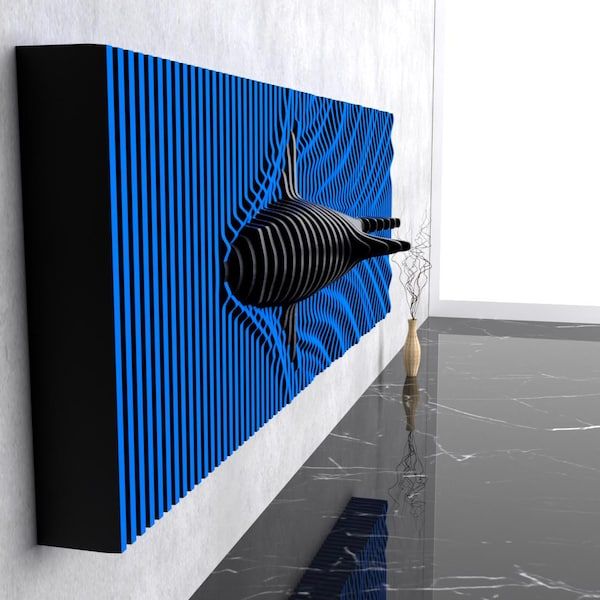
Wavy Wooden Laser Cut Decor – Parametric Wavy Wooden Shark
What Is Parametric Art
Using parameters to define and work with geometry is a creative process known as parametric art. Rather than creating each curve or surface by hand, the artist creates a system consisting of relationships and inputs. The entire piece of art reacts automatically when the inputs change. Instead of creating every detail by hand, this method enables the artist to concentrate on developing logic.
Parametric art is fundamentally about establishing a set of guidelines that control a visual result. These rules may take the form of mathematical relationships, conditions, or numerical values. Forms that adhere to those guidelines are then produced by the system. The artwork instantly changes if the rules are altered. This leads to an iterative process that resembles evolution.
A common example is a set of circles arranged in a grid. Normally, an artist would draw each circle manually. In a parametric system, the artist can define a circle and then tell the system to repeat it in a grid. They can then connect the size of each circle to a parameter, such as its position or the intensity of a noise field. If the value of that parameter changes, the grid of circles morphs into a new pattern. This ability to connect geometry with dynamic values is what makes parametric art powerful.
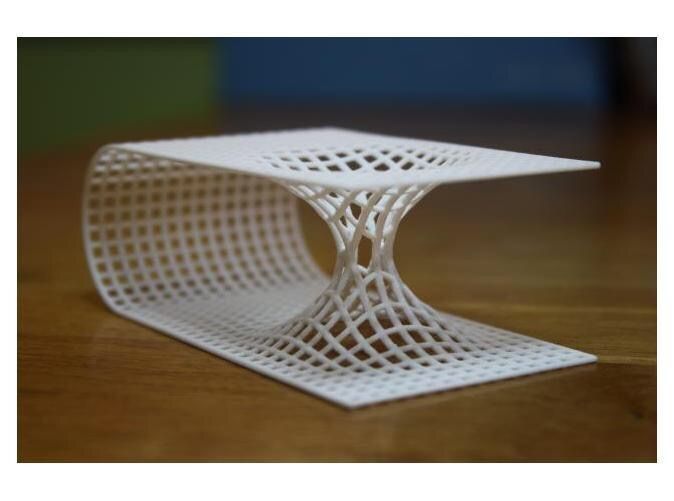
3D-printed Wormhole Visualization
Key Components of Parametric Art
Parametric art relies on three essential elements that work together. These are parameters, relationships, and algorithms.
1. Parameters
The variables that affect the artwork are called parameters. Scale, rotation, color, density, opacity, thickness, noise level, and deformation are all under their control. The adjustable components known as parameters allow the artist to mold the final product without actually touching the geometry.
A slider that regulates a wave pattern’s height is an example of a parameter. It might also be a number that indicates how frequently something occurs. Additionally, parameters can be more abstract, like a mathematical function that modifies curvature or a noise field that modifies point positions.
2. Relationships
Relationships connect geometry and parameters. At this point, the system starts to make sense. According to a relationship, a circle should get bigger as it gets farther from the center. A sine wave and a shape’s rotation could be related in another way. The logic that connects everything is determined by the artist.
These connections may be straightforward or complex. Making the connection between scale and distance is a basic example. Connecting color to curvature and position to noise values is a more complicated example. Because they specify how the artwork behaves when parameters change, relationships are fundamental to parametric art.
3. Algorithms
Algorithms define rules and processes that the artwork must follow. These rules can generate patterns, distribute elements, deform surfaces, or simulate natural phenomena. Algorithms can be mathematical, geometric, procedural, or even physics based.
For instance, an algorithm might divide a surface into triangles, then offset each triangle based on a parameter. Another algorithm might offset curves along a path to create a landscape like form. A more advanced one might simulate particle behavior to create flowing structures that resemble smoke or waves.
Together, parameters, relationships, and algorithms form a responsive system. The designer becomes the author of rules rather than the maker of forms. This creates a new type of artistic freedom.
Why Parametric Art Is Growing in Popularity
There are several reasons why parametric art has become popular among artists and designers across disciplines.
- Infinite Iteration
One of the biggest advantages is the ability to generate countless variations quickly. Designers often need to explore multiple directions before choosing a final form. Parametric systems make this exploration natural because changing values produces new outcomes instantly.
This is especially useful in industrial design, architecture, motion graphics, and branding, where teams expect fast iterations and multiple options.
- High Precision
Parametric workflows maintain accuracy even when dealing with complex geometry. Values can be controlled to exact decimal points. This level of precision makes parametric techniques ideal for applications that require clean geometry and consistent logic. It is why architects use parametric tools for building facades and why product designers use them for patterns and textures.
- Complexity Made Simple
Many parametric artworks look intricate. They might resemble natural growth patterns, cellular structures, wave formations, or mathematical landscapes. Creating these by hand would be tedious. Parametric systems make them achievable through rules.
What looks complex is often the result of simple relationships applied repetitively. This is one of the magical qualities of parametric art. It creates visually rich results without requiring endless manual work.
- Cross Disciplinary Value
Parametric art fits into multiple design domains. Architects use it for urban layouts and facades. Fashion designers use it for textile patterns. Product designers use it to develop textures and forms. Digital artists use it for real time visuals, generative installations, and animation.
The same logic can travel from field to field. This transferability is one reason why parametric thinking has become a valuable skill for designers entering the industry today.
- Creative Play
Parametric art encourages play. The designer can adjust values and watch as the system evolves. The process becomes exploratory. Sometimes the best outcomes come from unexpected combinations of parameters. This playful exploration makes parametric art feel alive.
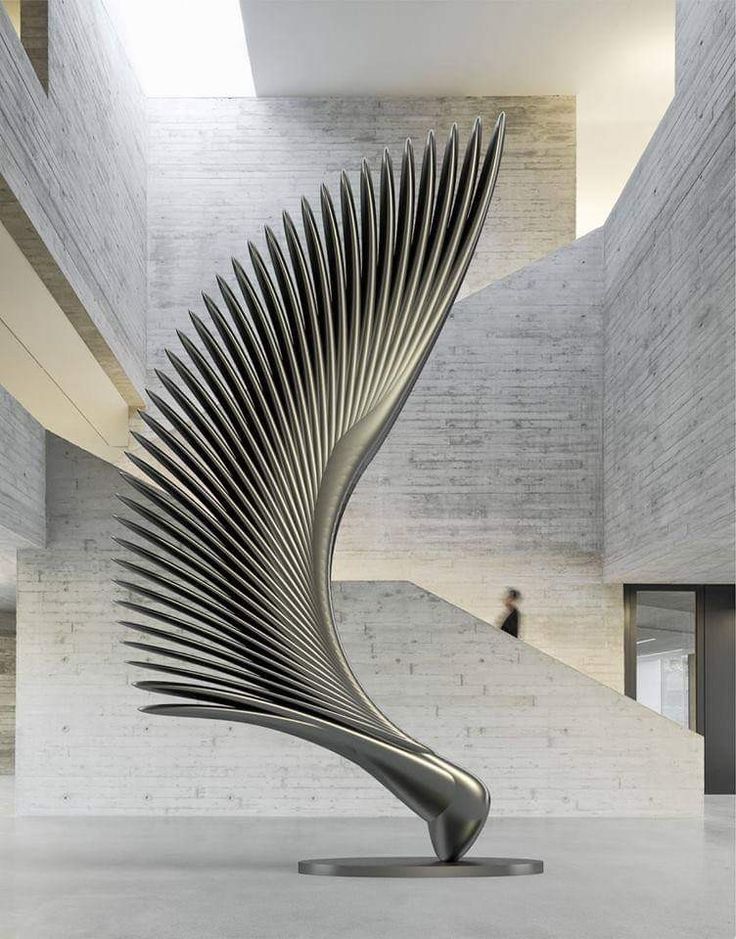
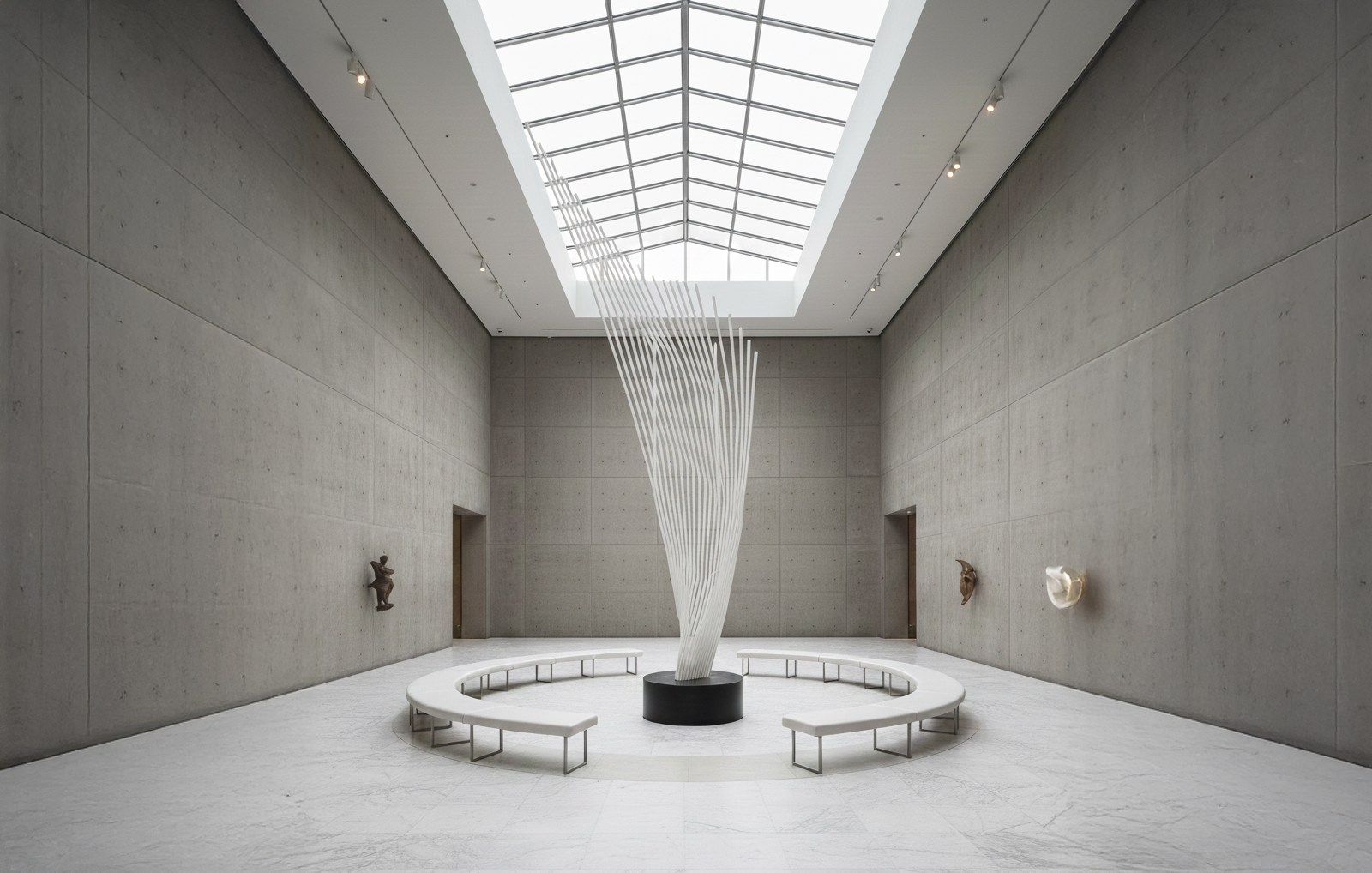
Velocity by Ken Kelleher Sculpture LLC
Parametric Art in Modern Design Practice
The influence of parametric art is visible in many areas today.
- Architecture
Architects use parametric systems to design facades that respond to sunlight, wind, or urban flows. They use geometric logic to generate building skins that are adaptive and efficient. Many of the most iconic buildings of the last decade are rooted in parametric principles.
- Product and Industrial Design
Product designers use parametric approaches to create patterns on surfaces, generate organic forms, and test multiple variations during the concept phase. Visual textures like Voronoi, wave deformations, and lattice structures often come from parametric systems.
- Digital and New Media Art
Parametric tools allow artists to create real time visuals that respond to sound, movement, or user interaction. Parametric systems are ideal for installations where information transforms geometry live.
- Motion Graphics
Parametric techniques allow motion designers to create animations where geometry behaves according to rules. This gives motion graphics a sense of coherence and organic movement.
- Branding and Visual Identity
Parametric branding uses generative logic to create identity systems that adapt across media. The brand becomes a living system rather than a static logo.
Why Parametric Art Encourages a New Way of Thinking
Learning parametric art changes how artists approach creativity. It teaches structured thinking without limiting imagination. It also encourages experimentation because the system can be explored endlessly.
- It builds a habit of exploration
Instead of trying one design, you try fifty. This leads to results that are more refined and more interesting.
- It develops logic driven creativity
Thinking in terms of relationships makes your design process more intentional. You understand why things look the way they do.
- It reduces creative fear
Because the system makes iteration fast, designers feel free to test unusual ideas.
- It increases adaptability
Parametric thinking helps designers move across disciplines. Whether working in digital art, architecture, or product design, the logic remains similar.
How to Create a Twisted Lattice Sculpture in BeeGraphy
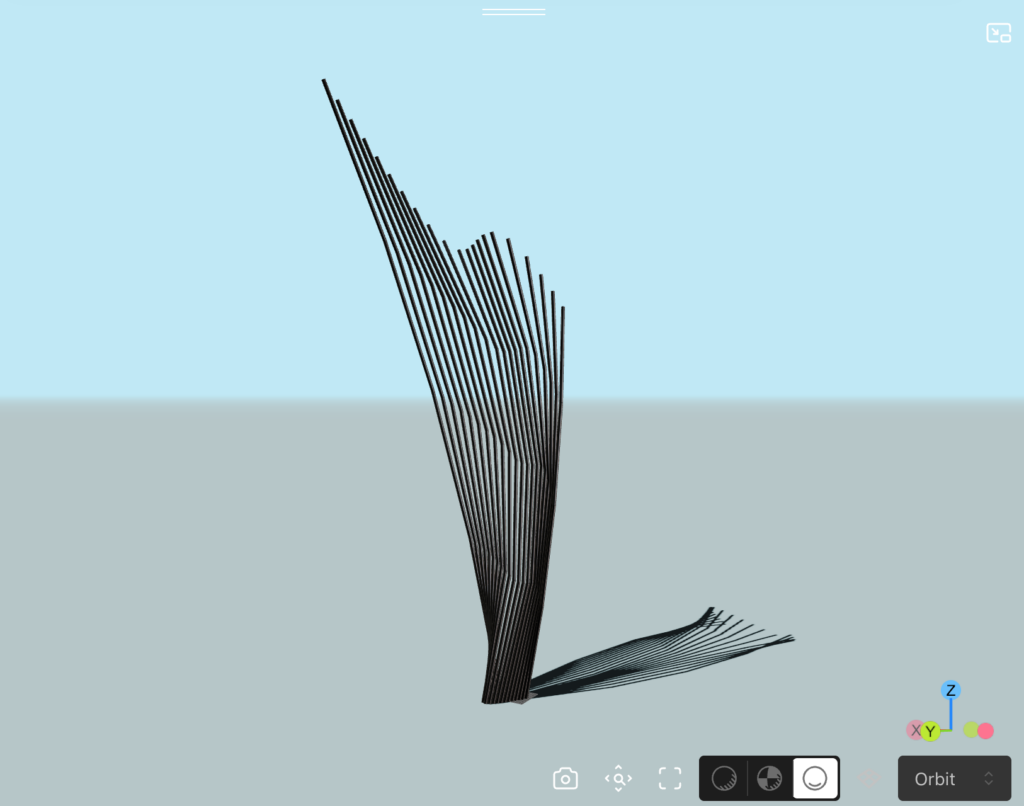
1. Build the Bottom Curve
- Add 3 Range Input / Number nodes for X offsets.
- Create 3 Construct Point nodes, plug X values, keep Y 0, Z 0.
- Connect all 3 points into Interpolate (Degree 3).
- Use Divide By Count to sample points along the curve.
- Graft Tree the output.
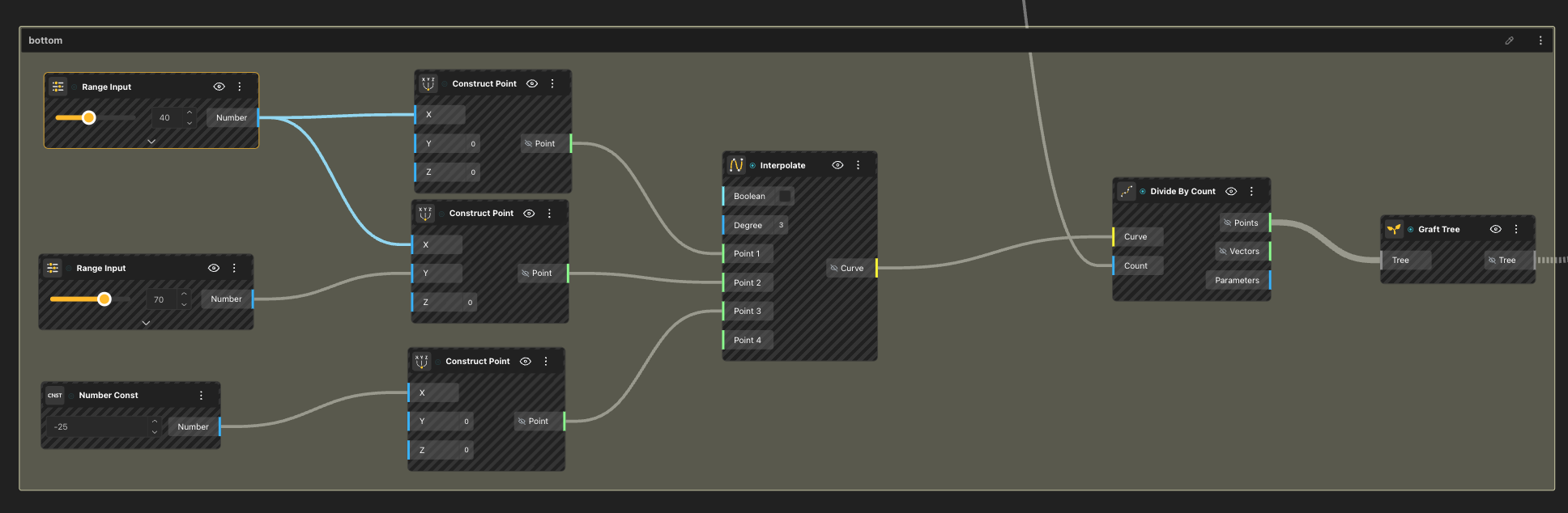
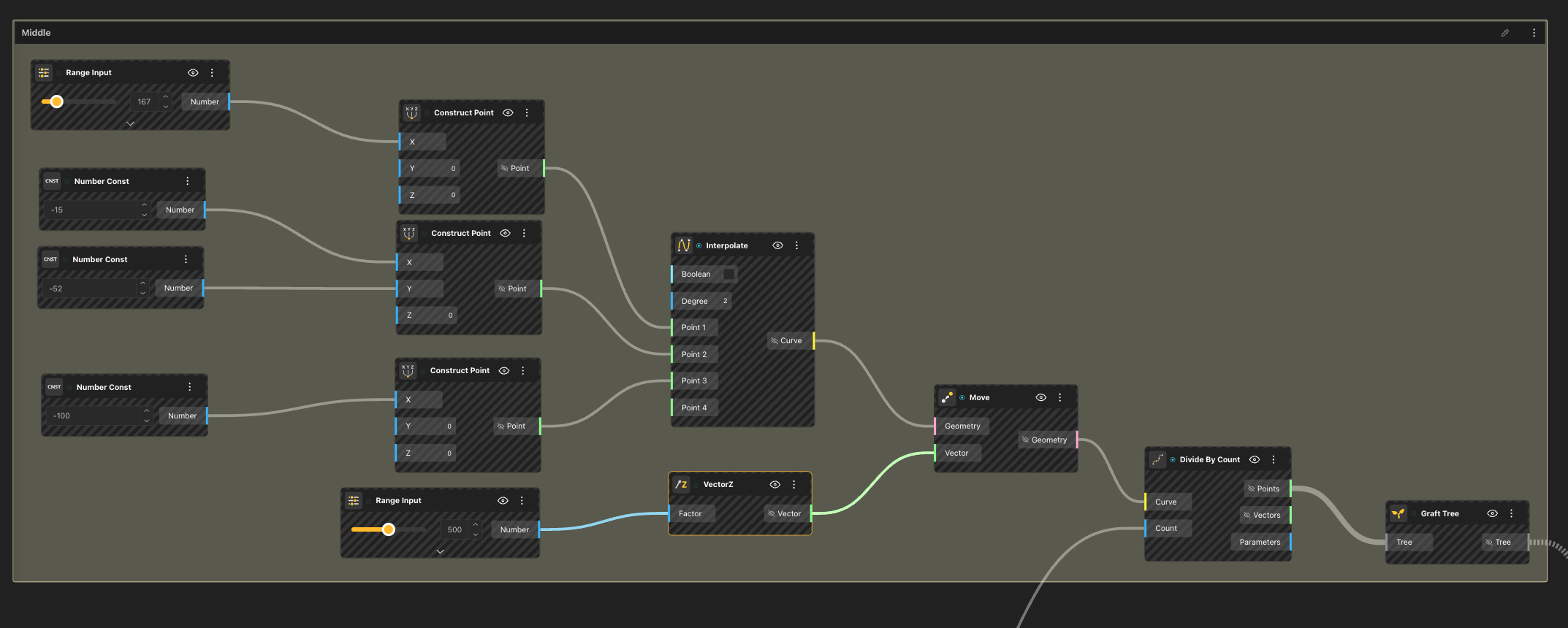
2. Build the Middle Curve
- Repeat the same setup with 3 control points.
- Lift the curve using VectorZ → Move.
- Divide using Divide By Count.
- Graft Tree.
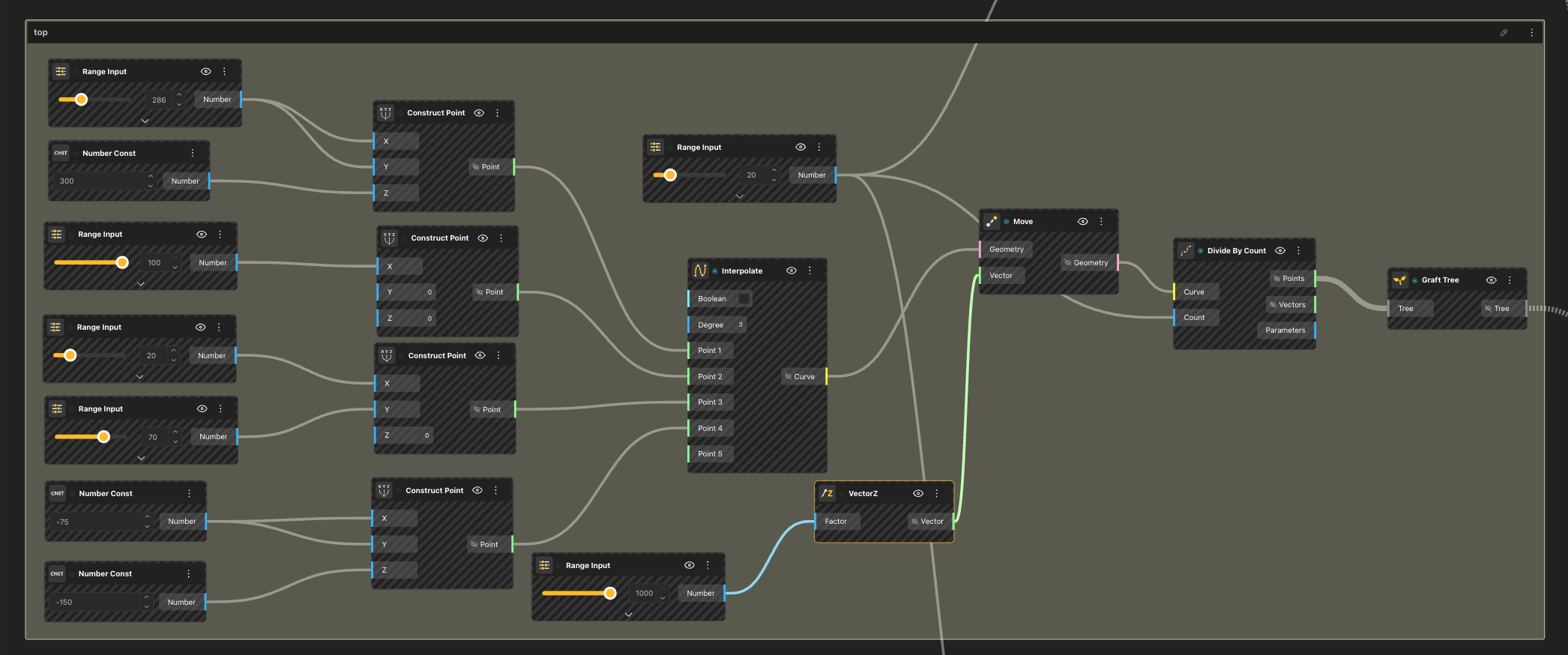
3. Build the Top Curve
- Add 5 Construct Point nodes for a more complex top profile.
- Connect them to Interpolate.
- Lift using VectorZ → Move.
- Divide By Count.
- Graft Tree.
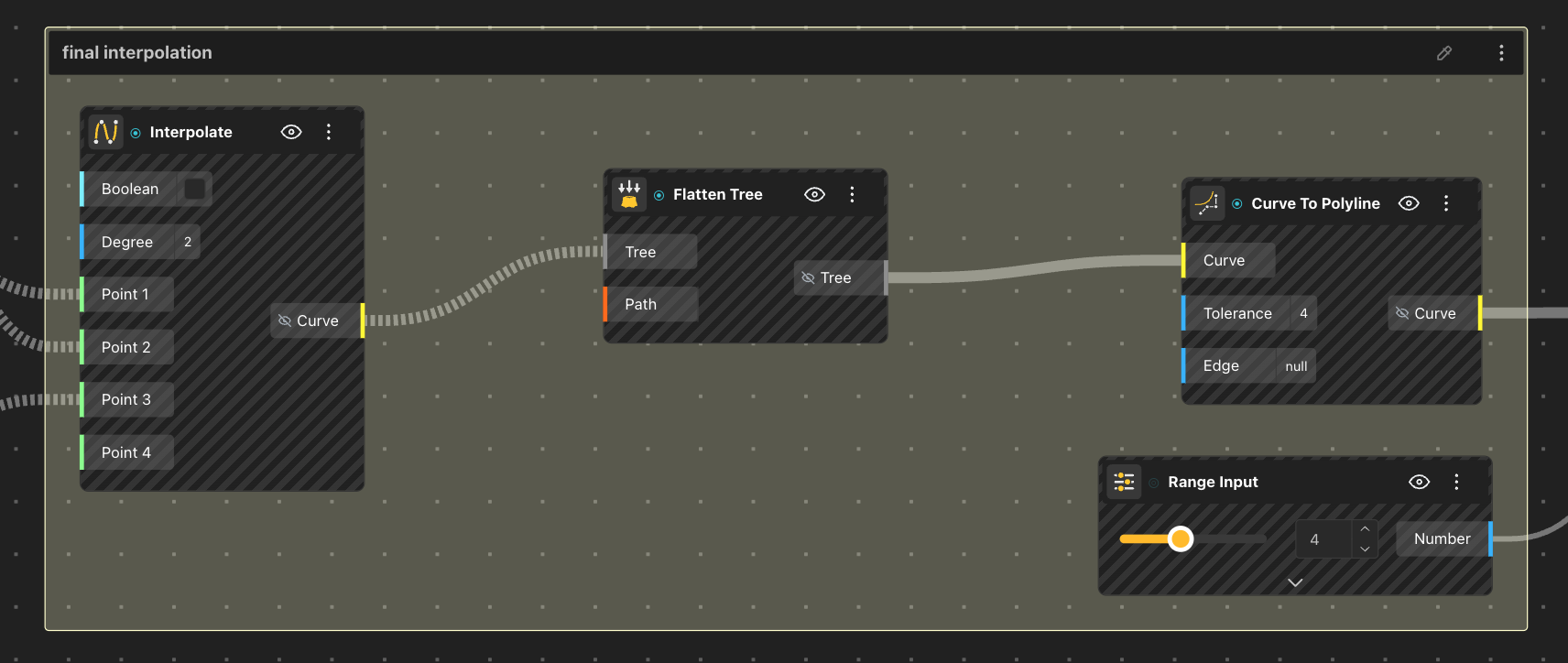
4. Connect Bottom, Middle, and Top into Rib Curves
- Take grafted points from all three sections.
- Plug them into Interpolate (Point 1 = bottom, Point 2 = middle, Point 3/4/5 = top).
- Flatten Tree
- Convert the result using Curve To Polyline for cleaner ribs.
5. Generate Thickness
- Feed each curve into Pipe.
- Set Radius using a slider.
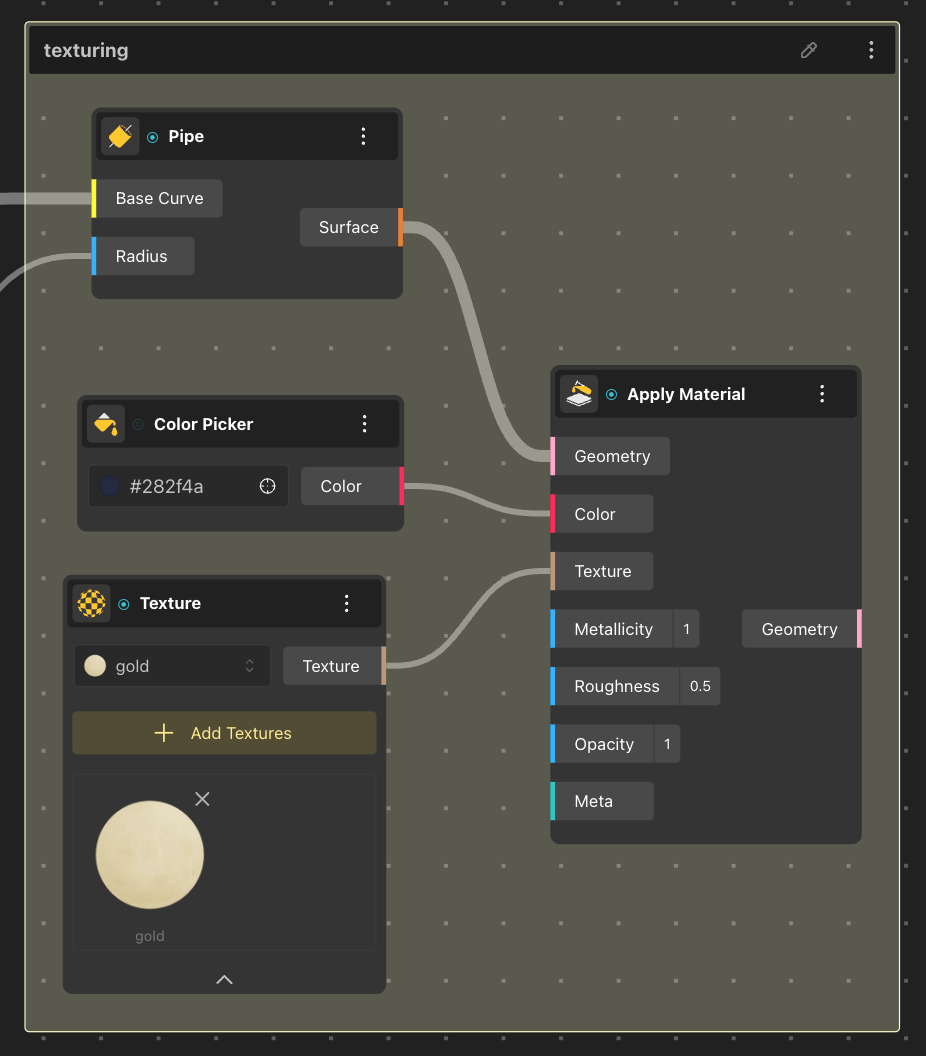
6. Apply Material
- Add Color Picker.
- Add Texture (optional).
- Use Apply Material.
- Geometry → Pipe
- Color → Color Picker
- Texture → Texture
- Metallicity / Roughness / Opacity as needed.
The Future of Parametric Art
The future of parametric art depends on a closer connection with real-time systems, artificial intelligence, immersive environments, and physical fabrication. As computational tools become easier to use, parametric workflows will become part of everyday creative practice.
Picture environments where artworks change based on biometric data. Think of products whose patterns adjust to user preferences. Visualize motion graphics that evolve and transform with sound input. Parametric art will be involved in all of these scenarios.
Artificial intelligence will not take over parametric logic; it will improve it. AI can help create rules, suggest connections, and refine parameters, while the designer stays in charge of the creative process.
The most exciting part is that parametric art is still evolving. It is not a closed field. It is a mindset of curiosity and experimentation.
Conclusion
A route to creativity that combines reason and intuition is provided by parametric art. It allows designers to experiment with forms that seem alive, responsive, and organic. Rather than sketching every detail, the artist creates a system, which then serves as the creative collaborator.
Parametric art is one of the most fulfilling areas to pursue for designers who love experimenting, appreciate computational tools, or wish to go beyond conventional modeling. It teaches the mind to think logically and visually. It increases self-assurance when trying new things. It provides opportunities in interactive art, motion graphics, architecture, product design, and generative branding.
In a world where visuals are becoming more dynamic and systems driven, parametric art is not just a technique. It is a creative language, a way of thinking, and a powerful tool for the future of design.