Table of Contents
Introduction
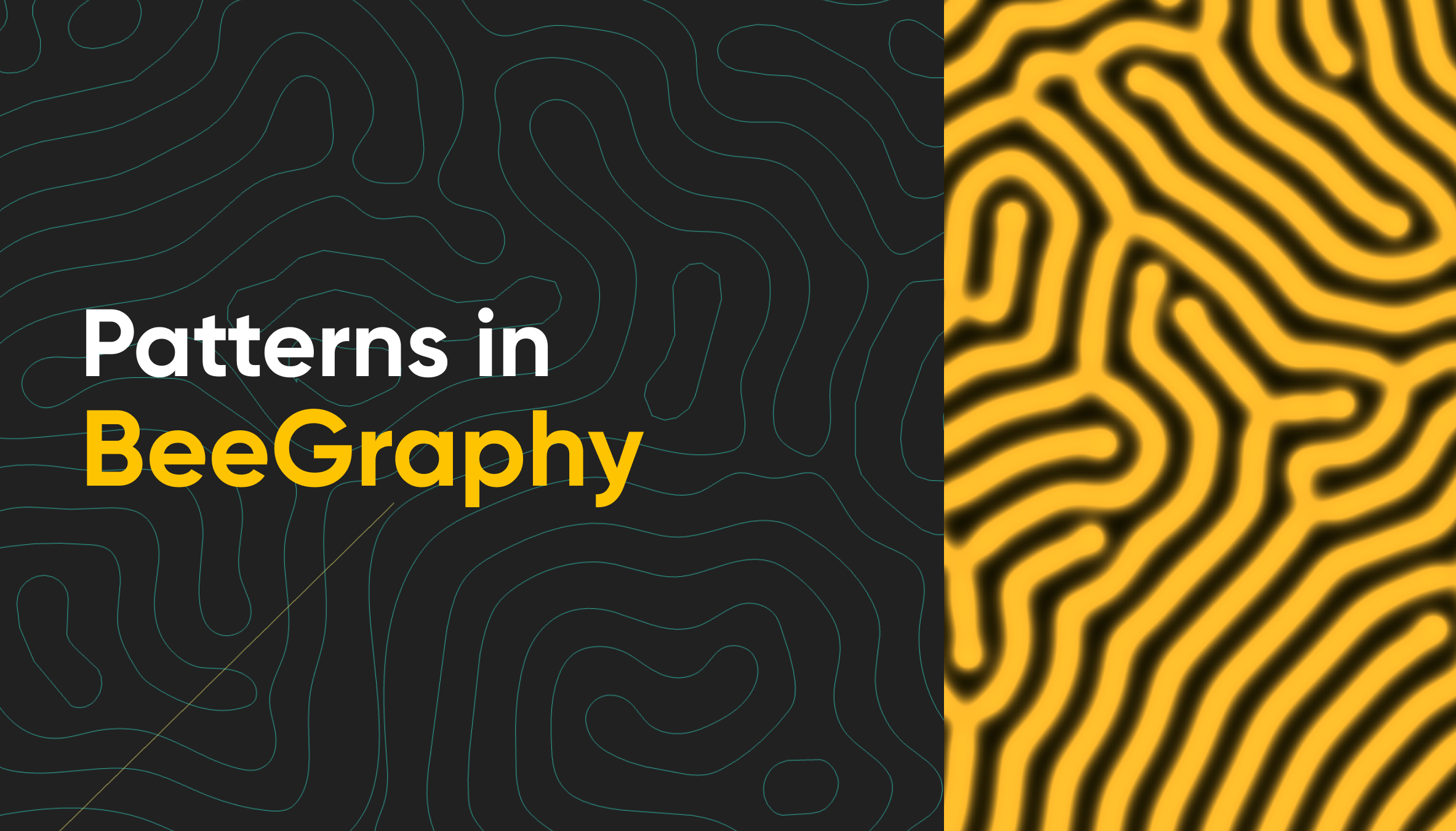
Patterns are everywhere. From the arrangement of leaves to the markings on animal skin, nature consistently produces complex visual systems without any central designer. These patterns are not random, they are governed by mathematical rules, physical interactions, and self-organizing processes. Understanding these principles allows designers to move beyond surface-level styling and begin working with systems that generate form autonomously.
One of the most influential contributions to this field came from Alan Turing. While widely recognized for his work in computation, Turing’s research on morphogenesis introduced a groundbreaking explanation for how natural patterns such as stripes, spots, spirals, and cellular structures emerge through reaction-diffusion processes. His theory shifted the understanding of design from static composition to dynamic formation, where complexity arises from simple interacting rules.
Today, computational tools such as BeeGraphy allow designers to translate these theoretical ideas into practical and visual workflows. Through node-based parametric systems, designers can construct rule-driven environments where patterns evolve, adapt, and generate themselves instead of being manually drawn. This marks a major transition in contemporary design thinking, from designing final outcomes to designing the systems that produce them.
This blog explores Turing’s findings and their influence on computational and parametric design. Alongside reaction-diffusion systems, it examines five additional natural pattern formations, analyzing the geometry, mathematical behavior, and real-world applications behind each one. By understanding how these systems function, designers can begin to use nature not simply as visual inspiration, but as a framework for generating intelligent and adaptive forms.
-

- Image Source: mathgeekmama.com

-
- Image Source: mathematicalmysteries.org
Turing Patterns and Reaction-Diffusion
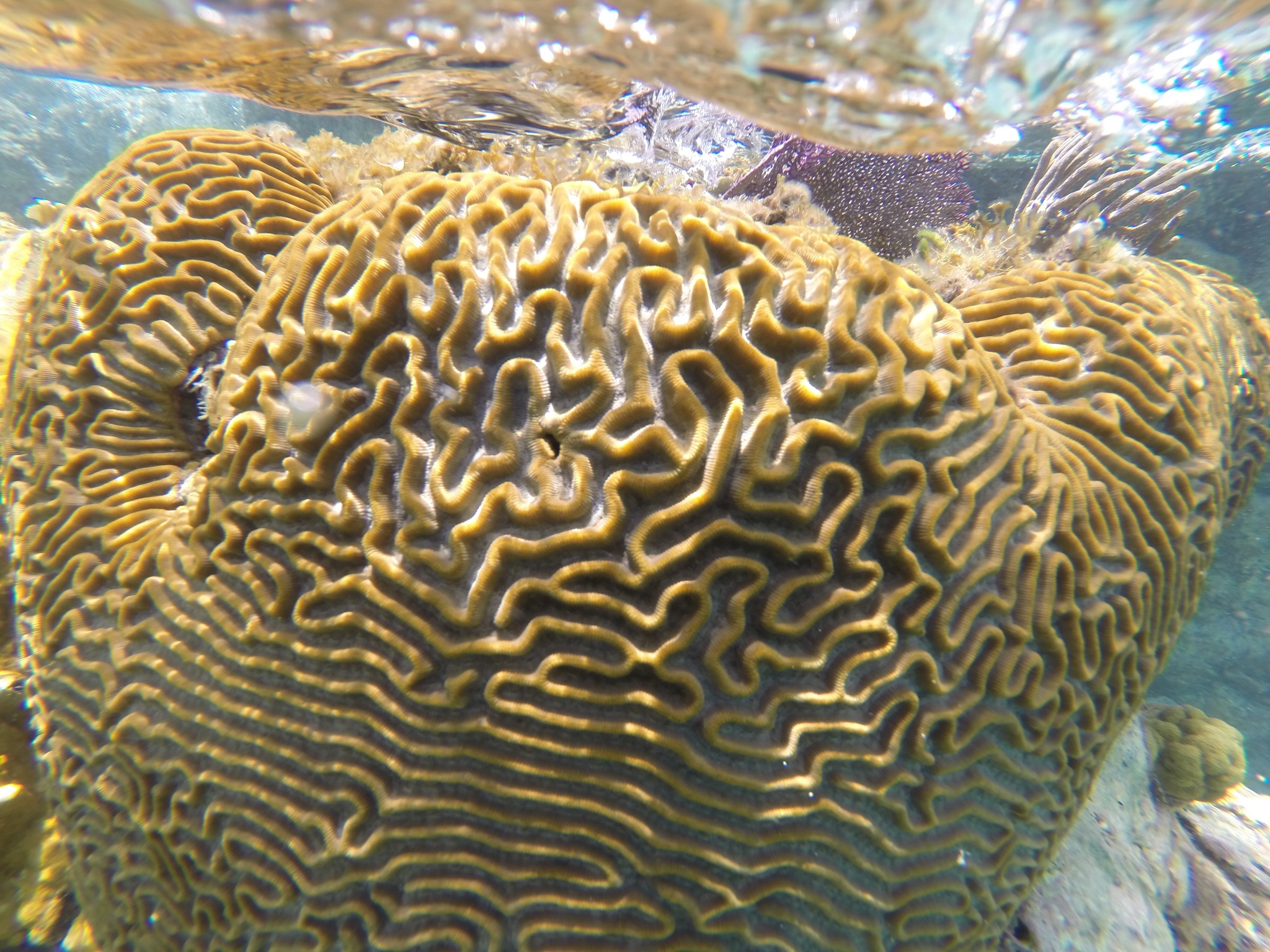
Turing patterns are generated through a mechanism known as reaction-diffusion. In this system, two substances interact across a surface, an activator and an inhibitor. The activator promotes growth or concentration in a region, while the inhibitor suppresses it. Crucially, these substances diffuse at different rates, leading to instability that produces visible patterns.
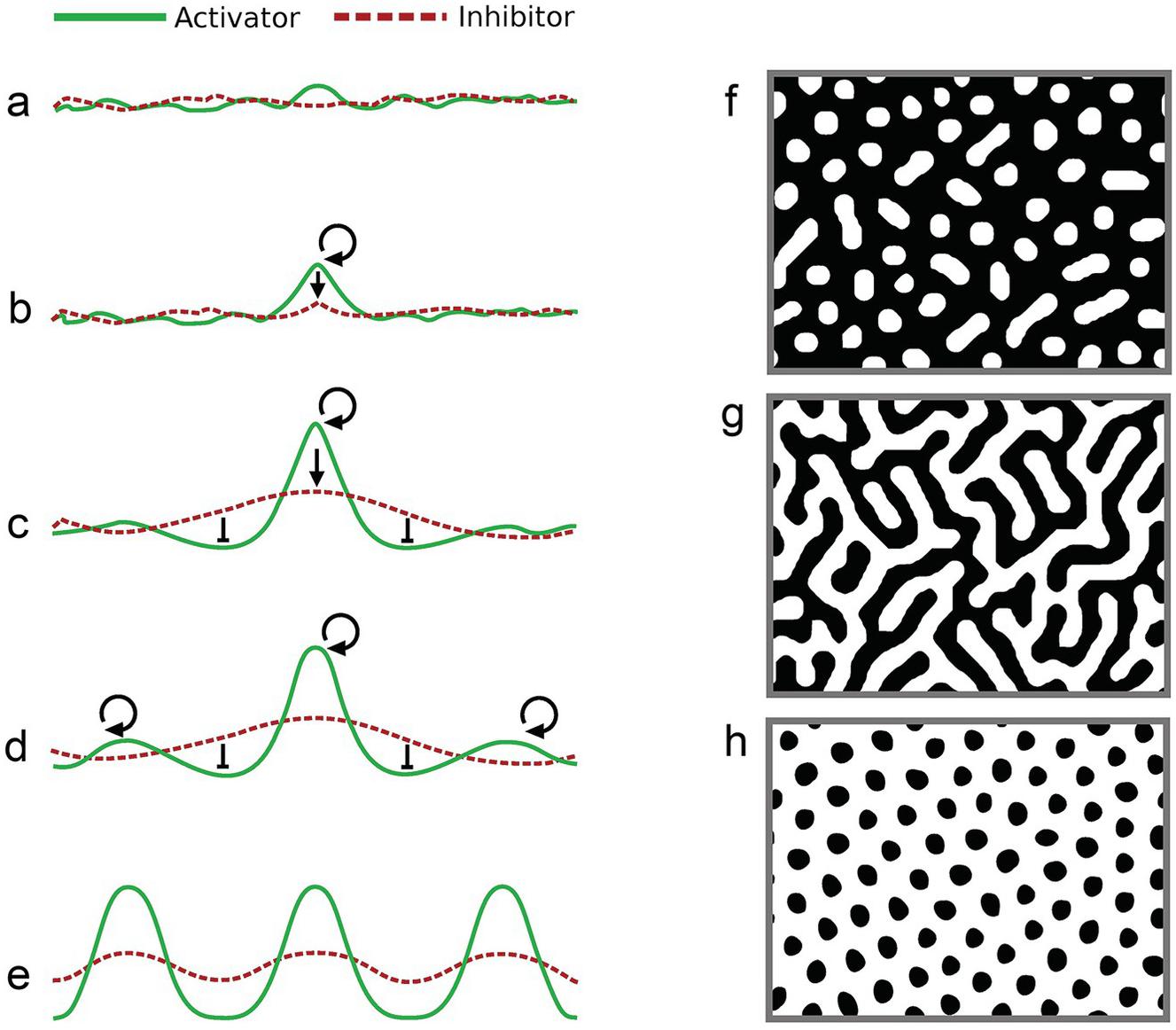
This process results in formations such as stripes, spots, and labyrinthine structures. What makes this model powerful is that it demonstrates how highly complex patterns can arise from very simple rules applied repeatedly over time.
For designers, the implication is important. Instead of manually designing a pattern, you define a set of relationships and allow the system to generate the outcome. The role of the designer shifts from creator to system architect.
Other Mathematical Pattern Systems
1. Fibonacci and Phyllotaxis Systems
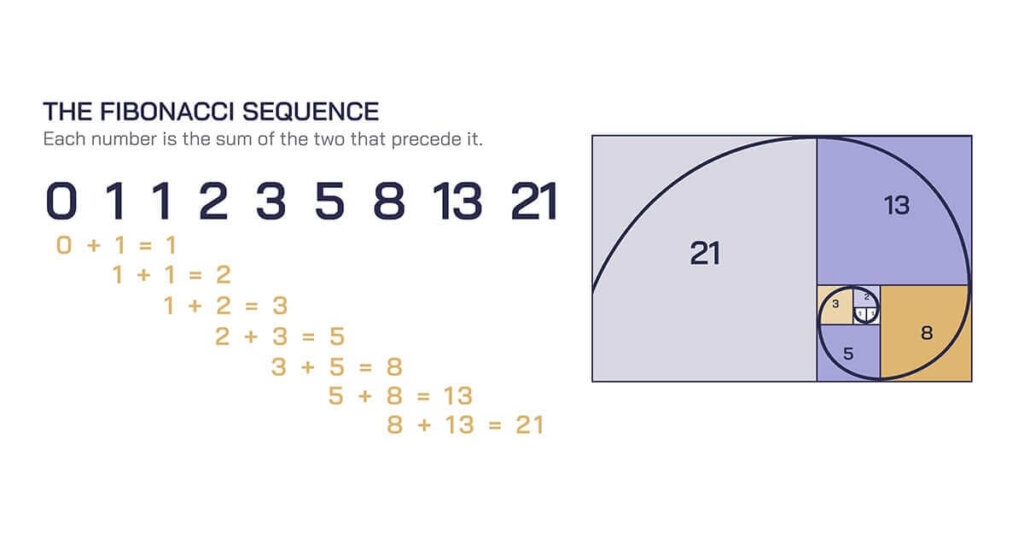
The Fibonacci sequence, formalized by Leonardo Fibonacci, governs many natural growth patterns. Phyllotaxis uses angular offsets, particularly the golden angle, to distribute elements efficiently without overlap.
The Fibonacci sequence, formalized by Leonardo Fibonacci, follows the recurrence relation:
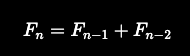
As the sequence progresses, the ratio between successive terms converges to the golden ratio (φ ≈ 1.618). This ratio underpins phyllotaxis, where elements are distributed using the golden angle, approximately:
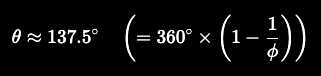
This angular offset is critical because it prevents alignment and overlap, producing an even, non-repeating distribution across a circular domain.
In BeeGraphy, this system is implemented as a parametric point-generation model, often driven through TypeScript for accuracy and scalability.
Using TypeScript nodes allows direct control over iteration, enabling the generation of thousands of points with consistent spacing and minimal computational overhead. This avoids the limitations of manual node chaining and ensures mathematical fidelity.
The resulting structure is not just visually organic, it is density-optimized and scale-independent, meaning the pattern maintains its properties regardless of size or resolution.
Applications
The significance of Fibonacci and phyllotaxis systems extends far beyond visual composition. These systems represent optimal packing and distribution strategies, making them relevant across multiple disciplines:
- Biology: Leaf arrangements and seed patterns maximize sunlight exposure and minimize competition
- Physics: Spiral wave patterns and energy distributions often follow similar radial efficiencies
- Computer Science: Used in data indexing, hashing, and spatial distribution algorithms
- Signal Processing: Phyllotactic sampling is used for uniform data acquisition in circular domains
- Astronomy: Spiral galaxy formations exhibit similar logarithmic and angular distributions
- Material Science: Efficient packing and stress distribution in radial systems
2. Voronoi and Spatial Partitioning
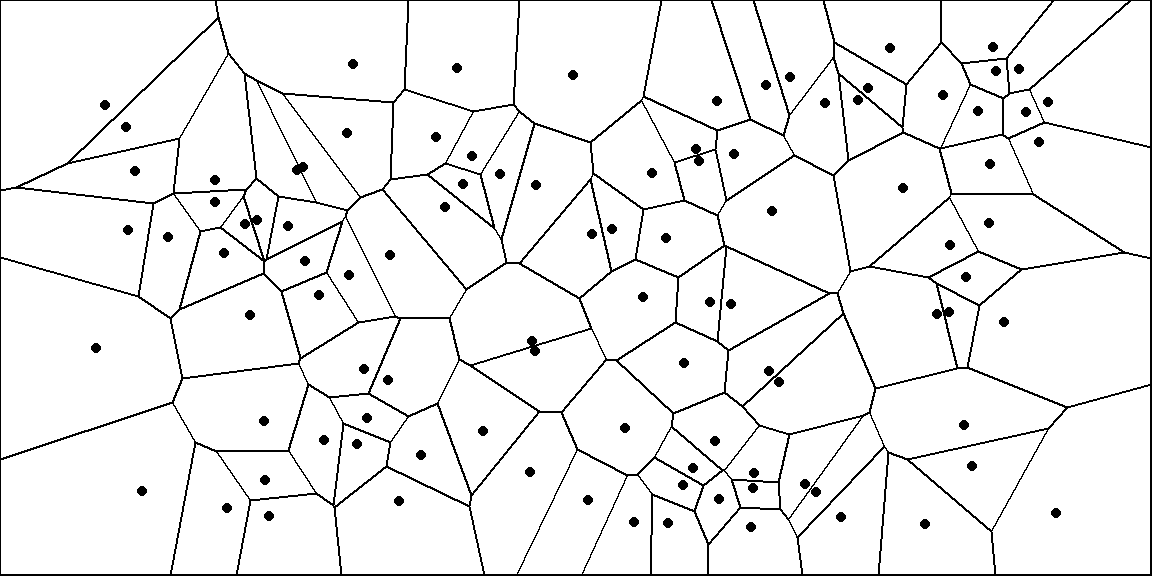
Voronoi diagrams, introduced by Georgy Voronoy, partition space into regions based on distance to a discrete set of points.

This makes Voronoi a distance-driven system, where geometry is not predefined but emerges from spatial relationships.
An important characteristic of Voronoi diagrams is their dual relationship with Delaunay triangulation. While Voronoi defines regions of influence, Delaunay connects points to form a stable network. Together, they form a foundational pair in computational geometry.
In BeeGraphy, Voronoi systems are constructed by first defining a point field, which acts as the primary input, the workflow eased by the Voronoi node. While node-based workflows can generate these diagrams, their true flexibility emerges when controlled through TypeScript.
With TypeScript, the point field itself becomes programmable. Designers can define conditions such as clustering, exclusion zones, or adaptive density, allowing the pattern to respond dynamically rather than remain static.
This shifts Voronoi from a visual subdivision tool to a parametric spatial system.
Applications
Voronoi systems are widely used because they model natural and computational partitioning processes:
- Biology: Cellular structures, tissue organization, and growth patterns
- Geography: Territory division, watershed mapping, and urban zoning
- Computer Science: Nearest-neighbor search, spatial indexing, and pathfinding
- Physics: Modeling crystal structures and particle distributions
- Telecommunications: Cell tower coverage and signal distribution
These applications rely on the core principle of proximity optimization, making Voronoi a fundamental tool for spatial reasoning.
3. Delaunay Triangulation Systems
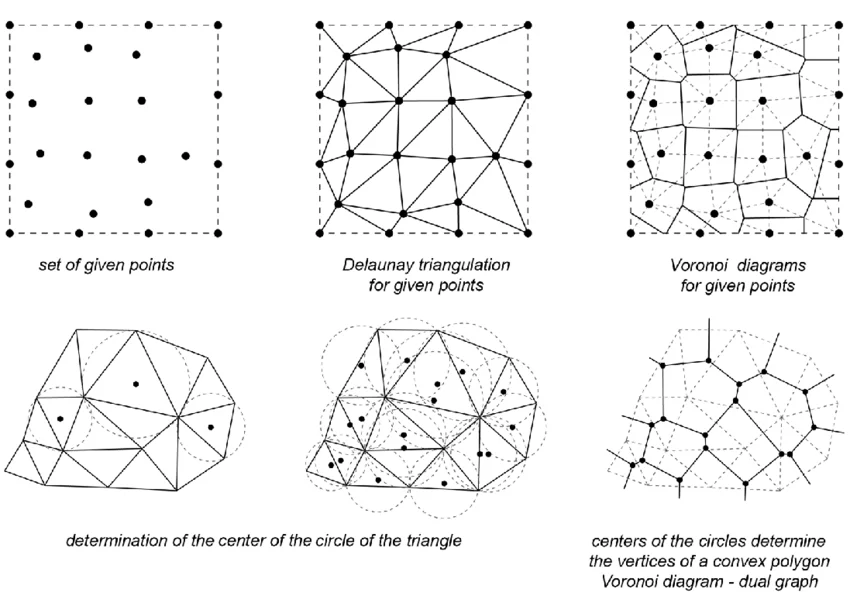
Delaunay triangulation, based on the work of Boris Delaunay, constructs a triangulated network from a set of points such that no point lies inside the circumcircle of any triangle.
This condition ensures that triangles are as close to equilateral as possible, avoiding long, thin elements that are structurally inefficient. As a result, Delaunay triangulation produces meshes that are geometrically stable and well-conditioned, making it a fundamental tool in computational geometry and structural modeling.
Delaunay is also the dual of the Voronoi diagram. While Voronoi defines regions of influence, Delaunay defines connectivity between points, forming a network that reflects proximity relationships in a structurally coherent way.
In BeeGraphy, Delaunay triangulation node typically operates on an existing point field, often derived from Voronoi or other distribution systems.
Applications
Delaunay triangulation is widely used because it provides an efficient way to represent spatial relationships while maintaining geometric quality:
- Finite Element Analysis (FEA): Mesh generation for structural and thermal simulations
- Computer Graphics: Surface reconstruction and terrain modeling
- Geographic Information Systems (GIS): Terrain interpolation and topographic mapping
- Robotics and Pathfinding: Navigation meshes and spatial connectivity
- Physics Simulations: Particle systems and force distribution networks
In all these cases, the triangulation acts as a framework for computation, not just visualization.
4. Noise-Driven Fields
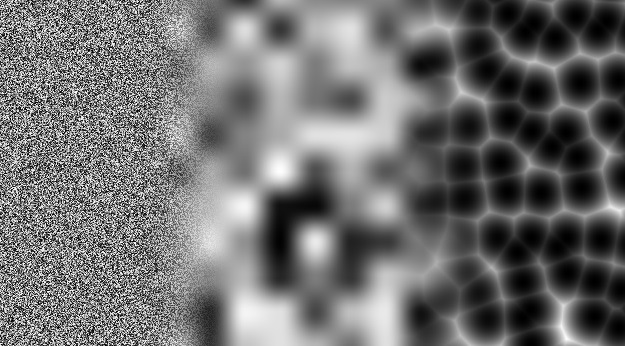
Noise functions, developed by Ken Perlin, generate a continuous scalar field that assigns a value to every point in space. Unlike random noise, which produces abrupt and uncorrelated variation, Perlin noise is gradient-based, meaning values change smoothly across space.
Formally, noise can be understood as a function:
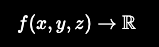
where nearby input points produce similar output values. This property, known as spatial coherence, is what makes noise suitable for modeling natural phenomena such as terrain, fluid motion, and material variation.
While a dedicated noise node is not yet available in BeeGraphy, TypeScript enables us to generate and control noise fields programmatically, allowing precise implementation of continuous, gradient-based variation across geometry.
A typical computational workflow includes:
- Generating a noise field across a defined domain
- Sampling noise values at each point or vertex
- Mapping these values to transformations such as displacement, rotation, or scaling
- Combining multiple noise layers (octaves) to increase detail and complexity
Applications
Noise functions are widely used across disciplines because they model natural irregularity within a controlled framework:
- Computer Graphics: Terrain generation, texture synthesis, and procedural environments
- Physics Simulations: Modeling turbulence, wave motion, and particle systems
- Signal Processing: Generating and analyzing smooth stochastic signals
- Biology: Simulating growth variation and pattern irregularities
- Film and Animation: Creating realistic motion, surfaces, and environmental effects
In each case, noise provides a way to introduce complexity without sacrificing coherence.
5. Penrose Tiling and Non-Periodic Systems
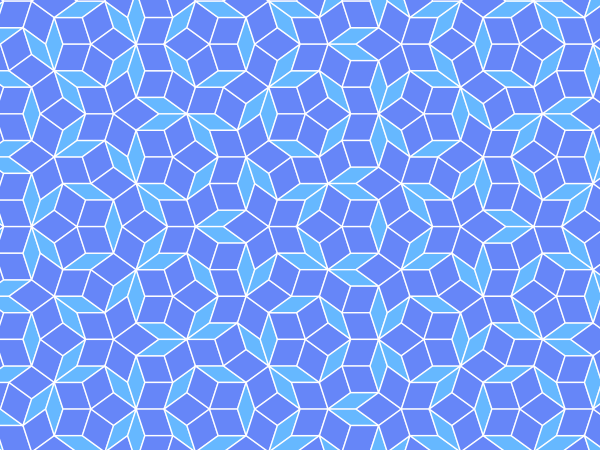
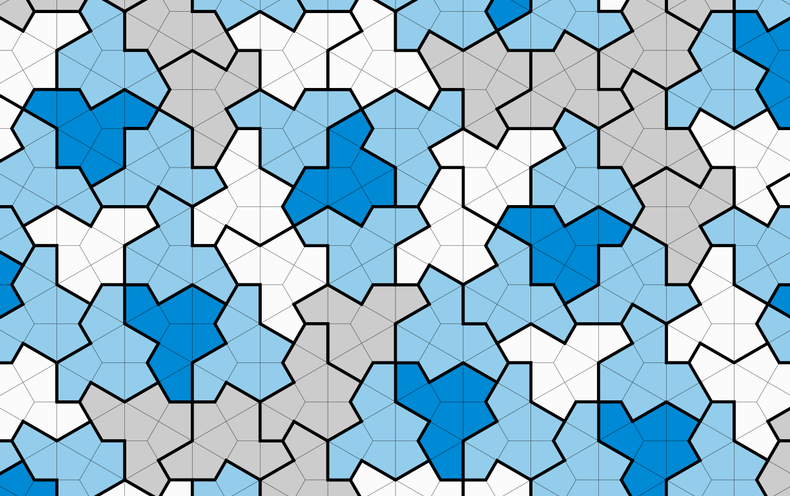
Penrose tiling, discovered by Roger Penrose, is an aperiodic tiling system that covers a plane without ever repeating. Unlike conventional tiling, which relies on translational symmetry, Penrose tiling enforces non-periodicity through strict geometric constraints.
The system is typically constructed using a limited set of prototiles, most commonly the kite and dart or rhombus variations, arranged according to matching rules. These rules prevent periodic repetition while still allowing the pattern to extend infinitely.
A key property of Penrose tiling is its connection to the golden ratio (φ ≈ 1.618), which governs the proportions and scaling relationships between tiles. This ensures that, although the pattern never repeats, it maintains global coherence and local consistency.
Implementation in BeeGraphy
In BeeGraphy, Penrose tiling is fundamentally a rule-based generative system, created efficiently using typescipt.
Applications
Penrose tiling is significant beyond visual patterning because it represents ordered systems without repetition, a concept with implications across multiple fields:
- Physics: Modeling quasicrystals, which exhibit ordered but non-periodic atomic structures
- Material Science: Studying non-repeating lattice systems with unique structural properties
- Mathematics: Exploring symmetry, tiling theory, and aperiodic order
- Crystallography: Understanding structures that defy traditional periodic classification
These applications highlight that Penrose tiling is not just decorative, it is a fundamental model of non-periodic organization.
TypeScript Nodes: The Core Layer of Control
Across all these systems, a clear pattern emerges. While BeeGraphy’s node interface is effective for building relationships, it reaches limitations when dealing with iteration, recursion, and conditional logic.
TypeScript nodes act as the computational backbone of these workflows.
They enable:
- Iterative generation of large datasets
- Conditional logic and rule-based systems
- Mathematical precision beyond visual node chains
- Integration of multiple pattern systems into a single workflow
In the examples developed throughout this project, TypeScript was not used as a supplement, but as a primary method for constructing pattern logic. It allowed each system to remain flexible, scalable, and computationally efficient.
More importantly, it shifts the role of the designer again, from connecting nodes to writing logic that defines behavior.
Applications in Design and Fabrication
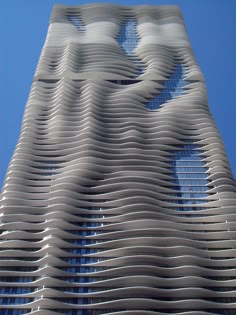
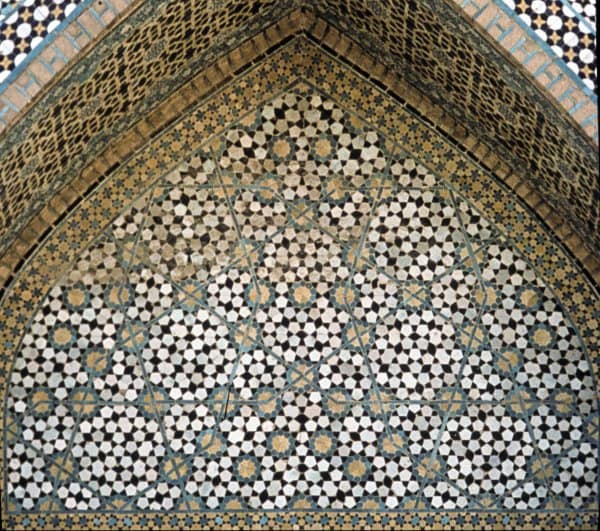
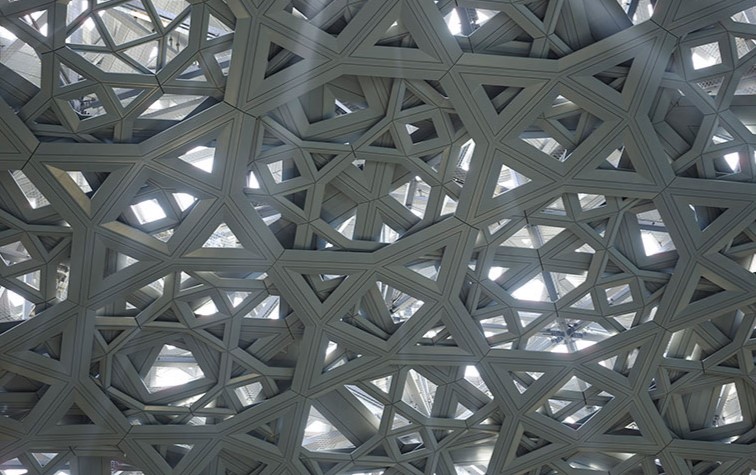
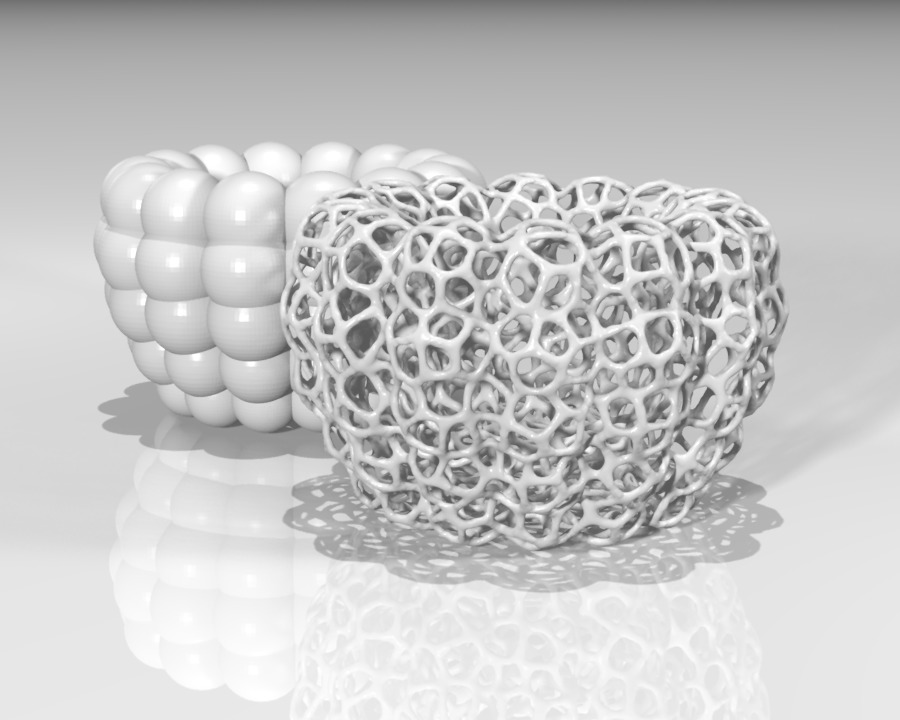
The integration of mathematical patterns into design workflows has practical implications across multiple disciplines.
1. Architectural Systems
Parametric patterns allow facades to respond to environmental conditions such as sunlight, airflow, and thermal performance. For example, a noise-inspired surface can create varying densities of openings, improving shading while maintaining visual interest.
This approach transforms facades from static skins into performative systems.
2. Product Design
In product design, mathematical patterns enhance both function and aesthetics. Speaker grills, lighting fixtures, and wearable products often rely on perforation patterns that balance airflow, strength, and visual appeal.
Using generative systems ensures that these patterns are not arbitrary but optimized for performance.
3. Digital Fabrication
One of the most significant advantages of parametric design is its compatibility with digital fabrication. Outputs from BeeGraphy can be directly translated into machine instructions for CNC cutting, laser cutting, or 3D printing.
This reduces the need for post-processing and aligns with workflows that prioritize efficiency and precision.
4. Material Optimization
Mathematical distribution of material allows designers to reduce weight while maintaining structural integrity. Lattice structures, gradient densities, and branching systems can be generated using parametric logic.
This is particularly relevant in industries where material efficiency is critical.
5. Interactive and Media Design
When combined with tools like TouchDesigner, generative patterns can become interactive. Parameters can respond to user input, sound, or environmental data, creating dynamic installations and digital experiences.
This expands the role of patterns from static visuals to responsive systems.
Conclusion
The study of Turing patterns and mathematical systems reveals a fundamental principle, complexity can emerge from simplicity. A small set of rules, when applied iteratively, can produce an infinite range of outcomes.
BeeGraphy enables designers to harness this principle in practical ways. By working with nodes and parameters, designers can build systems that generate, adapt, and fabricate patterns efficiently.
This approach does more than improve workflow, it changes how design is understood. Instead of focusing on individual outputs, designers begin to think in terms of processes and relationships.
That shift is essential for anyone aiming to work at the intersection of design, computation, and fabrication. It moves design from a craft of making to a discipline of system building, where the real value lies not in the final form, but in the logic that produces it.