BeeGraphy Editor
The workspace where parametric 2D and 3D models are built from nodes. This page covers the layout, canvas controls, node placement, collaboration tools, and viewing modes.
01 / Layout
Editor layout
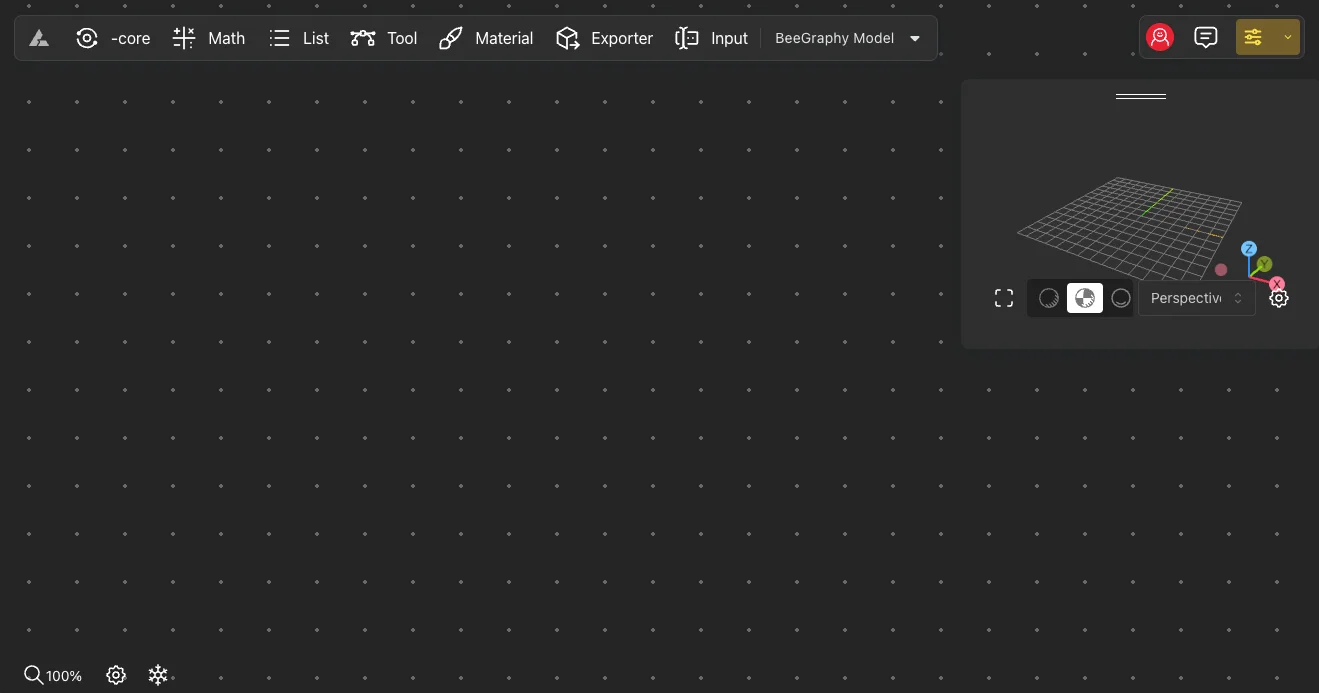
The workspace is divided into four regions. Each corner serves a specific purpose.
Upper left
Toolbar
Every Editor tool, grouped by node package.
Upper right
User Zone
Active users, comments, and viewer mode.
Lower left
Editor Controls
Solver controls and the scale (zoom) button.
Any corner
3D Output Window
The live preview - dockable to any of the four corners.
The centre of the screen is the main workspace - this is where the parametric graph is assembled by dropping nodes onto the canvas and wiring them together.
02 / Canvas
Canvas controls
Move around the workspace, zoom in and out, and pause the solver when you need to reshape a complex graph.
Panning the workspace
Hold the right mouse button and drag to pan in any direction. Panning only changes the view - it never moves the nodes themselves.
Scale & zoom
Use the mouse scroll wheel to zoom in and out, or click the scale control in the lower-left corner to jump to a preset size. Zoom to Fit reframes the view so every node is visible.
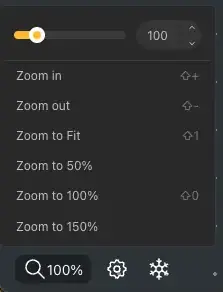
Scale control
Shortcut
Action
Reset to 100% scale
Zoom to Fit - shows all nodes at once
Zoom in
Zoom out
Stop Solver
The Stop Solver button pauses all graph calculations. Use it when you need to make several parameter changes in sequence without waiting for intermediate recomputes - press again to resume.

Stop Solver
03 / Nodes
Adding nodes
Two ways to place a node on the canvas - search-based via the Node Chooser, or browse-based from the Toolbar.
Node Chooser
Double-click any empty spot on the canvas to open the Node Chooser. Commonly used nodes appear at the top. Type a name or keyword into the search field to filter.
Scroll through the matches and left-click a node to drop it at the cursor position.
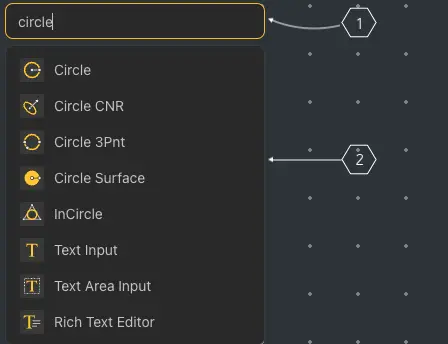
Double-click to open
Toolbar
Every node package is also available from the toolbar in the upper-left corner. Find a node inside its group, then click and drag the icon onto the workspace to place it.
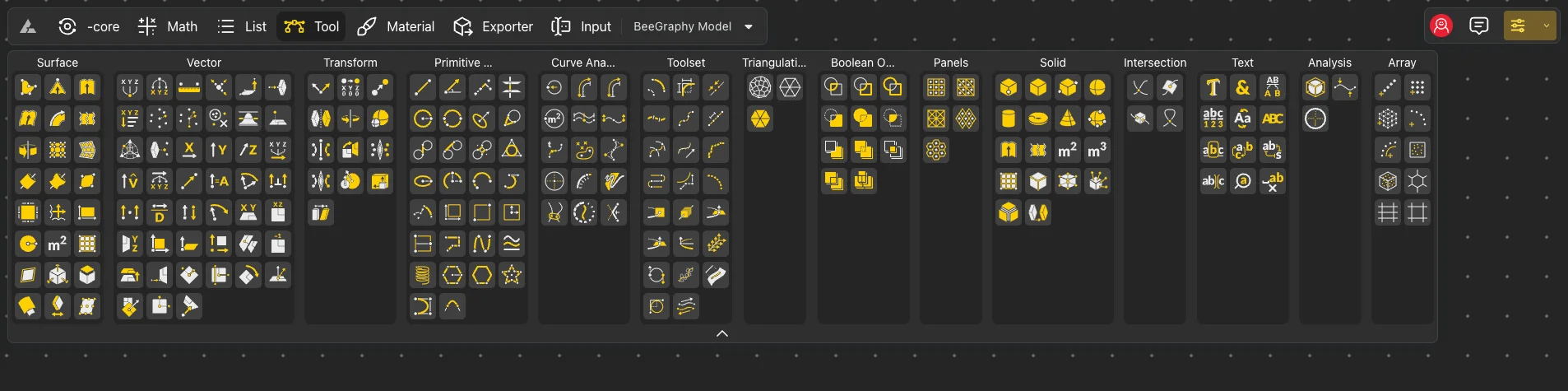
Toolbar - grouped by package
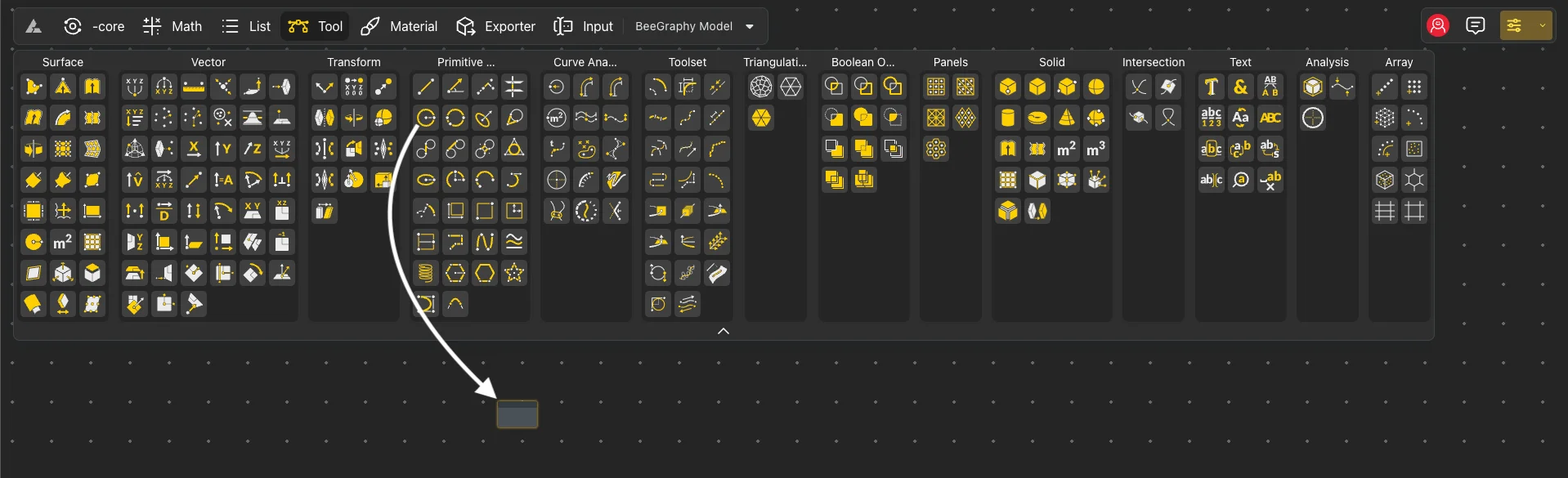
Drag a node onto the canvas
04 / User Zone
User zone
Collaboration tools live in the upper-right corner of the Editor.
- Active Users: see who else is currently in the model.
- Comment: drop a comment on the canvas.
- Viewer Mode: open the model in read-only view.

Click a user's picture to open the Active Users panel - it lists everyone currently viewing or editing the model alongside you.
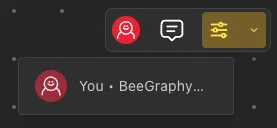
Active collaborators
05 / Comments
Comments
Pin threaded comments anywhere on the canvas for review and collaboration.
Step 1. Click the Comment button in the user zone - the cursor changes to a comment pin.
Step 2. Click the spot on the workspace where you want the comment anchored.
Step 3. Type your message in the field that appears, then press the send button.
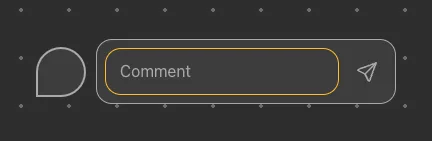
Placing a comment
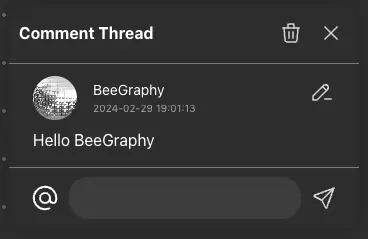
Writing the comment
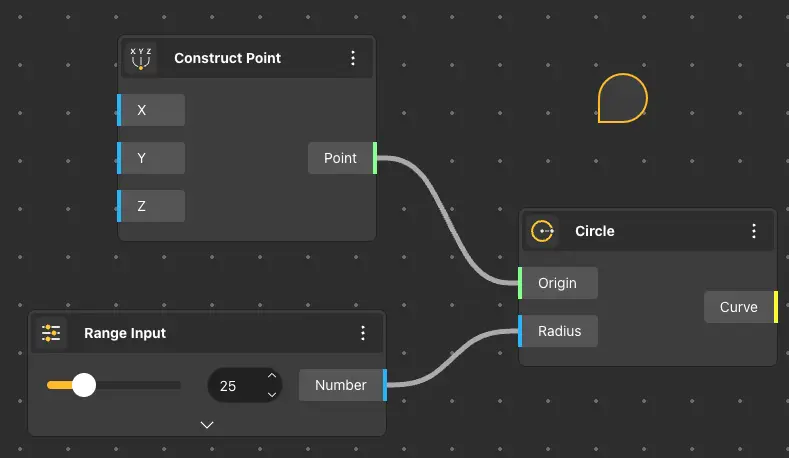
Pinned on the canvas
06 / Viewing
Viewing modes
Open your model in one of two end-user views - Configurator or Demo.
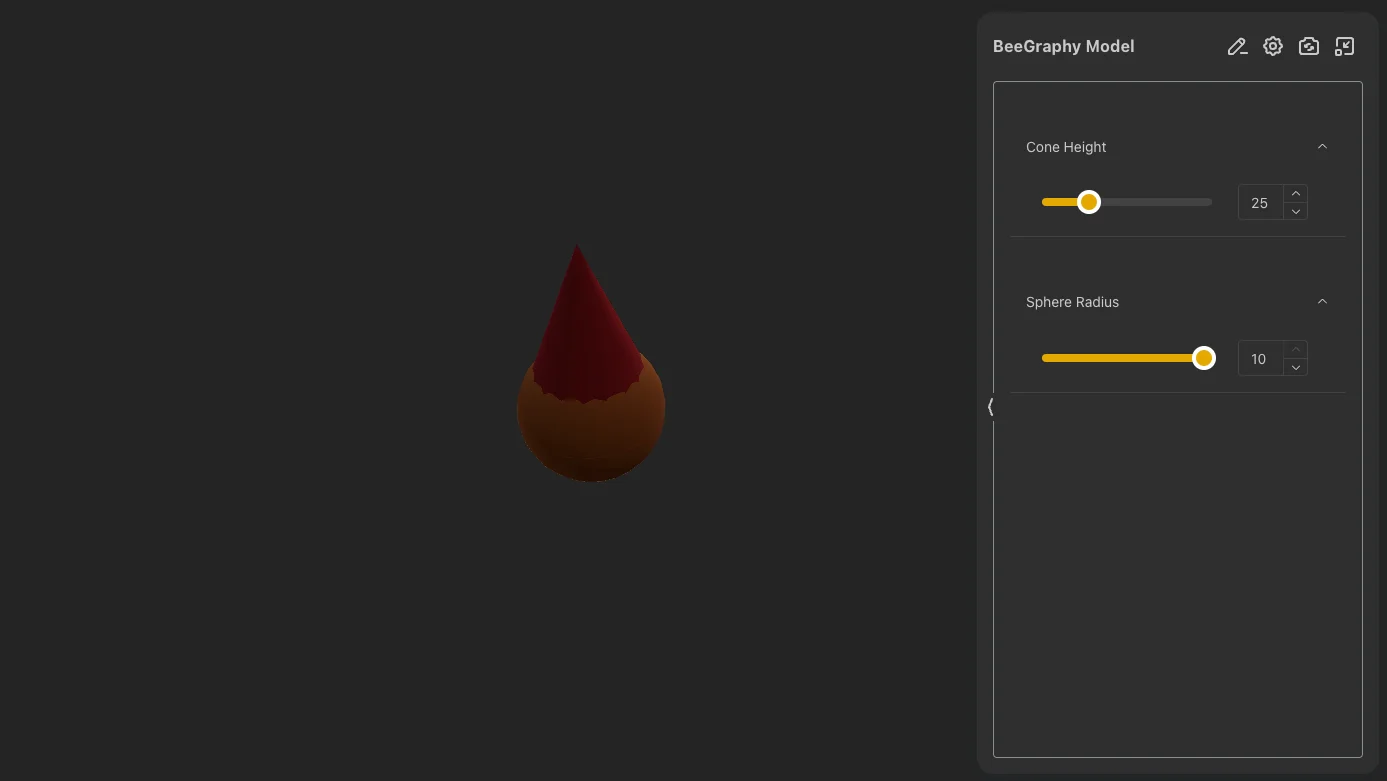
Configurator
Select and configure parameters as an end user would. Changes made here are reflected back in the Editor. You can rename variables, reorder them, tweak values, and set the camera position and direction on the model.
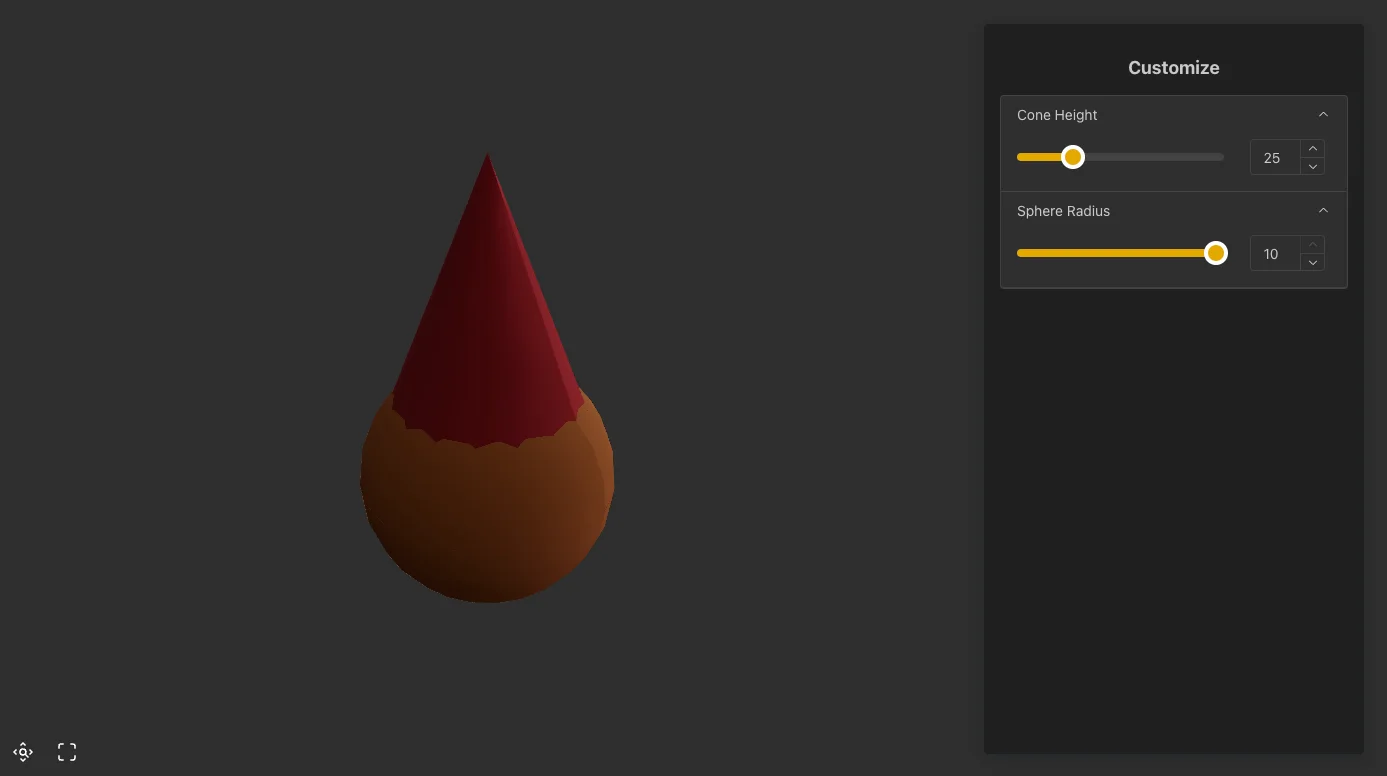
Demo
Adjust parameters and orbit the model from any angle. Intended for quick review and presentation, without the full configurator surface.
Once you pick a mode, the icon updates to reflect your choice - from then on, a single click on the icon opens the model in that mode directly.
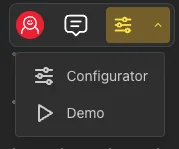
Viewing modes
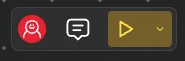
Switching viewing mode